
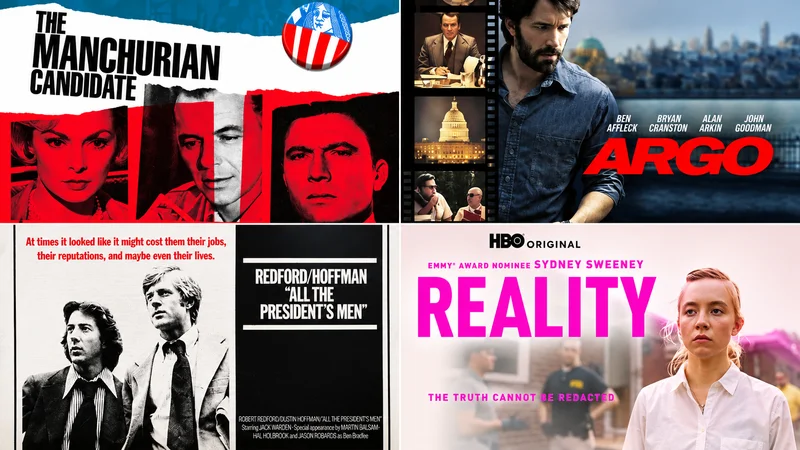
The best political thriller movies turn government secrets, fragile alliances, and competing versions of the truth into suspense you can feel. This guide features 45 films from classic Cold War paranoia to modern espionage and international stories, including All the President’s Men, The Lives of Others, The Secret Agent, and 1987: When the Day Comes. The goal is to help you find a gripping film, not simply collect famous political titles.
At CandyJar, we look for stories where a character faces pressure from powerful institutions or must decide what to do with dangerous information. Some selections are fictional conspiracies; others dramatize recorded events, and a few combine political tension with satire, science fiction, or courtroom drama. Each film below includes quick facts followed by a spoiler-conscious explanation of its appeal.
This collection of the best political thriller movies ranges from 1962 through 2025 and covers American, European, Asian, African, and Latin American perspectives. Titles are grouped by what makes them suspenseful, rather than by a claim that one film objectively outranks another. Where a production borrows from history, the description distinguishes its dramatic treatment from proven events. Expect no major ending spoilers.
How to Pick the Right Political Thriller
The best political thriller movies can be investigative, action-driven, emotionally intimate, or deliberately ambiguous. Choose newsroom stories when you enjoy documents and witnesses, spy films when you like uncertain loyalties, or institutional dramas when your favorite suspense comes from difficult decisions behind closed doors. This list uses broad genre boundaries but emphasizes political power as a central source of conflict.
Here are the defining elements that make political thrillers so compelling:
- Government conspiracies and corruption: Secret operations, political scandals, cover-ups, and abuses of authority create conflicts where uncovering the truth can be dangerous.
- Espionage and intelligence operations: Undercover agents, classified information, double agents, and shifting loyalties bring uncertainty to national and international security stories.
- Political power struggles: Elections, leadership conflicts, military coups, and competing institutional interests raise the stakes beyond individual survival.
- Investigative journalism and whistleblowing: Reporters, government employees, and ordinary citizens risk their careers or safety to expose information powerful organizations want concealed.
- Moral dilemmas and uncertain loyalties: Characters must choose between professional duty, personal principles, national security, and the consequences of their decisions.
- Real-world political tension: Historical events, diplomatic crises, surveillance, and international conflicts provide recognizable settings for suspense, whether the story is factual, fictional, or inspired by history.
Whether you prefer a slow-burning conspiracy mystery or a fast-paced espionage story, these elements can help you find a political thriller that matches your interests.
Classic Conspiracies and Cold War Paranoia
For readers seeking the best political thriller movies about paranoia, these classics show how a rumor, recording, or single document can place an ordinary investigator in danger. They reward attention to atmosphere as much as plot.
1. All the President’s Men (1976)
- Director: Alan J. Pakula
- Focus: Investigative journalism and institutional secrecy
- Best for: Patient reporting and evidence-driven suspense
Washington Post reporters Bob Woodward and Carl Bernstein follow a seemingly limited break-in at the Democratic National Committee headquarters into a much larger story. Their investigation unfolds through reluctant sources, uncertain leads, editorial questions, and pressure to establish facts before publishing. The Watergate backdrop provides genuine historical stakes without turning the journalists into action heroes.
Pakula makes telephone calls and newsroom conversations as tense as an assassination chase. It is a strong starting point for viewers who prefer a thriller powered by verification rather than gunfire. The film dramatizes real reporting, but individual conversations and scenes should still be understood as part of a cinematic reconstruction.
2. The Parallax View (1974)
- Director: Alan J. Pakula
- Focus: Assassination conspiracy and paranoia
- Best for: Unsettling ambiguity and shadowy organizations
A journalist begins investigating a political assassination and encounters a mysterious organization that seems connected to a succession of suspicious deaths. Each apparent breakthrough makes the surrounding system harder to understand. The story resists the comforting idea that discovering a clue automatically brings an investigator closer to safety.
Wide spaces, cold architecture, and a lonely protagonist give the film its distinctive sense of helplessness. Watch it if you enjoy conspiracies that remain frightening even when they are not fully explained. The lack of reassurance is a feature of the film, not a missing conventional detective solution.
3. Three Days of the Condor (1975)
- Director: Sydney Pollack
- Focus: Intelligence agency conspiracy
- Best for: An accessible fugitive thriller
Joe Turner is a CIA researcher whose ordinary workday collapses after the people in his office are killed. Suddenly unsure which colleagues he can trust, he tries to understand why his seemingly harmless research made him a target. The premise transforms office routine into a desperate search for an explanation.
Robert Redford gives the protagonist an appealing combination of intelligence and vulnerability. Compared with the bleakest paranoia films of its era, this one offers more forward momentum and chase sequences. Its central concern remains how a person can seek protection when the institutions meant to provide it may also be implicated.
4. The Manchurian Candidate (1962)
- Director: John Frankenheimer
- Focus: Cold War brainwashing and electoral intrigue
- Best for: Surreal psychological tension
A decorated soldier returns from war surrounded by glowing praise, while another veteran suffers disturbing dreams that suggest the official story is incomplete. Their experiences lead toward a political plot involving manipulation, spectacle, and the terrifying possibility that a person might be used without understanding his own actions.
Frankenheimer blends nightmare imagery with sharp political satire and suspense. The film is a fictional Cold War fantasy, not evidence that its imagined mind-control techniques were used in an actual election. Its continuing fascination comes from the question of who benefits when public heroes are manufactured.
5. Seven Days in May (1964)
- Director: John Frankenheimer
- Focus: Threat of a military coup
- Best for: Institutional suspense and restrained performances
An American military officer begins to suspect that senior figures are planning to overthrow the elected president during an international crisis. He must decide how to respond without exposing a source or triggering the very breakdown he fears. Much of the tension arises from meetings, uncertain loyalties, and procedural limits.
Instead of depending on an endless string of attacks, the movie makes constitutional responsibility feel urgent. It is an excellent pick for viewers interested in how officials could react to a hypothetical challenge from within government. Its fictional situation offers a dramatic thought experiment rather than a prediction about real institutions.
6. Z (1969)
- Director: Costa-Gavras
- Focus: Political assassination and cover-up
- Best for: Fast-paced, internationally focused cinema
Following an attack on an opposition politician, an investigator begins confronting contradictions in an official account. Witness intimidation and institutional obstruction gradually expose the struggle to establish what happened. Inspired by the killing of Greek politician Grigoris Lambrakis, the film presents the investigation with the pace and tension of a thriller.
Costa-Gavras keeps the momentum high while giving the political setting a clear human cost. This is a powerful choice if you want a film where evidence has to survive the influence of powerful interests. The narrative is a fictionalized treatment of historical events, and its characters should not be mistaken for a complete documentary record.
7. The Conversation (1974)
- Director: Francis Ford Coppola
- Focus: Surveillance and moral responsibility
- Best for: Slow-burning psychological dread
Harry Caul, a professional surveillance expert, records a couple speaking in a public square and becomes concerned about what the recording might mean for their safety. As he replays fragments and revisits his assumptions, his confidence in his own interpretation begins to erode. The tension comes from listening, uncertainty, and guilt.
This is more intimate than most government-conspiracy movies, but its anxieties about information gathering fit the political-thriller tradition. The intricate sound design makes repeated listening part of the drama. Choose it when you want a mystery about the ethics of surveillance rather than a straightforward chase.
8. The Day of the Jackal (1973)
- Director: Fred Zinnemann
- Focus: Fictional assassination plot against Charles de Gaulle
- Best for: Methodical cat-and-mouse suspense
A professional assassin is hired to kill French president Charles de Gaulle, setting off a painstaking race between the would-be killer and the authorities. The film devotes attention to forged identities, planning, police coordination, and the difficulty of finding someone who has carefully avoided familiar patterns.
Its precision is the attraction: every seemingly small logistical decision matters. Although de Gaulle is a historical figure, the central hired-assassin plot comes from Frederick Forsyth’s novel and should be treated as fiction. This is ideal for people who prefer intelligent procedure to flashy action.
9. Blow Out (1981)
- Director: Brian De Palma
- Focus: A recording that may expose political murder
- Best for: Stylish paranoia and audio clues
A sound technician accidentally records a car accident involving a political figure and begins to suspect that the event was deliberately engineered. His search for corroborating evidence pulls him into a world of deception and danger. A seemingly ordinary piece of audio becomes the focus of the investigation.
De Palma mixes expressive camera work with the meticulous mechanics of recording and editing sound. The film is more emotionally intense and visually elaborate than most newsroom dramas. It is a strong pick if you want to see how technology can both reveal evidence and leave an investigator dangerously exposed.
Spies, Intelligence Agencies, and Global Security
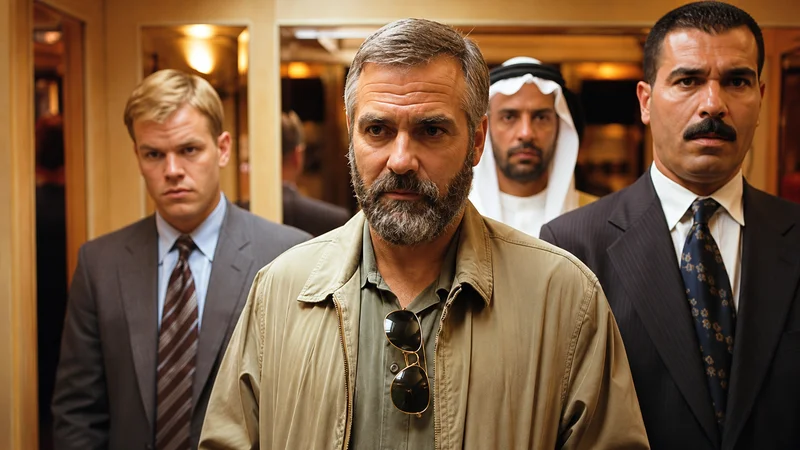
Many of the best political thriller movies ask whether an intelligence mission can remain controlled once officials disagree about the goals. These films explore secrecy, public safety, and personal responsibility from different angles.
10. The Lives of Others (2006)
- Director: Florian Henckel von Donnersmarck
- Focus: East German state surveillance
- Best for: Emotionally rich espionage drama
In 1980s East Berlin, a Stasi officer monitors a playwright and his partner, expecting to find evidence of disloyalty. Listening to their private lives begins to complicate his understanding of duty and the people he is ordered to watch. The story turns surveillance into a deeply personal moral test.
The controlled performances and carefully observed domestic spaces make this more affecting than a conventional spy chase. It is particularly rewarding for viewers who want a political story grounded in individual conscience. Its fictional characters exist within a real historical system of state surveillance.
11. Tinker Tailor Soldier Spy (2011)
- Director: Tomas Alfredson
- Focus: A suspected mole inside British intelligence
- Best for: Dense clues and restrained performances
Retired intelligence officer George Smiley is quietly brought back to identify a possible Soviet mole in the upper levels of the British service. Every conversation may contain a partial truth, and years of professional loyalties make the search emotionally complicated. The danger rarely announces itself through explosions.
The film rewards close attention to silences, shifting alliances, and names that reappear after a long interval. Its deliberate pace can be demanding for viewers who prefer clear exposition, but that restraint is precisely its appeal. This adaptation of John le Carré is suited to a second viewing.
12. Argo (2012)
- Director: Ben Affleck
- Focus: A diplomatic escape operation in Iran
- Best for: High-stakes historical rescue
During the 1979 Iranian hostage crisis, six American diplomats take refuge outside the embassy and need a plausible way to leave the country. A CIA specialist develops a cover story involving a nonexistent science-fiction film production. The resulting mission depends on coordination, forged identities, and keeping nervous participants focused.
Its blend of humor and mounting anxiety makes the complex premise accessible. The central escape operation draws from real events, though the adaptation changes and compresses parts of the history, including contributions from other countries. View it as tense historical drama rather than a complete account of the operation.
13. Munich (2005)
- Director: Steven Spielberg
- Focus: A covert response to the 1972 Olympics attack
- Best for: Moral uncertainty in espionage
After the killing of Israeli athletes at the Munich Olympics, a covert team undertakes missions against people believed to be involved. The work takes the operatives across European cities, where secrecy and fear gradually change their relationships with one another. The plot focuses on the emotional consequences of clandestine violence.
Spielberg emphasizes uncertainty rather than simple victory, asking how people decide when a mission has achieved its purpose. The film dramatizes contested historical material and does not establish a definitive factual record of every operation. It is more reflective and troubling than a celebration of covert action.
14. The Spy Gone North (2018)
- Director: Yoon Jong-bin
- Focus: Undercover contact between North and South Korea
- Best for: Dialogue-driven intelligence suspense
A South Korean operative adopts the cover of a businessman to approach North Korean officials in the 1990s. His mission depends on patience and carefully constructed trust, but commercial and diplomatic relationships gradually reveal competing interests. The stakes extend beyond one spy’s personal safety to regional politics.
Instead of wall-to-wall action, the film makes negotiations and subtle changes in allegiance exciting. The sense that someone may be interpreting a conversation differently keeps scenes tense. Inspired by an actual espionage case, it is a valuable choice for viewers wanting political nuance in a Korean thriller.
15. Official Secrets (2019)
- Director: Gavin Hood
- Focus: A leaked intelligence memo before the Iraq War
- Best for: Whistleblowing and legal pressure
British intelligence employee Katharine Gun receives a secret communication suggesting an effort to influence United Nations votes before the 2003 Iraq invasion. Her decision to disclose it creates consequences for her career, marriage, and legal safety. The film follows the risks of making a document public and defending the choice afterward.
Its suspense depends on a real dilemma: how can an employee challenge an order while bound by secrecy laws? Keira Knightley gives the central conflict a personal focus. The film is based on documented events, while still using the selection and compression expected of dramatization.
16. The Report (2019)
- Director: Scott Z. Burns
- Focus: Investigation of CIA detention practices
- Best for: Government records and institutional resistance
Senate investigator Daniel Jones works through an enormous body of documents concerning the CIA’s detention and interrogation program after September 11. His task is to determine what the records show and whether the findings can reach the public. The drama develops through research, internal disagreement, and pressure over disclosure.
An unusually cerebral film, it makes the process of assembling evidence feel like a pursuit. It is less suited to viewers seeking physical action, but compelling for those interested in oversight and accountability. Its depiction is based on an actual investigation and should be distinguished from the full documentary record.
17. Eye in the Sky (2015)
- Director: Gavin Hood
- Focus: A proposed drone strike and civilian risk
- Best for: Real-time ethical suspense
A multinational security operation changes when new intelligence identifies a threat and an unexpected civilian presence complicates the proposed strike. Officers, lawyers, and political officials debate the available options as time passes. The film turns a remote military decision into a tightly coordinated series of moral and practical disagreements.
The tension comes from the gap between technological precision and human uncertainty. It is especially effective for viewers who like contained dramas in which no decision is free of risk. The events are fictional, though the questions of authority, proportionality, and intelligence are recognizable.
18. A House of Dynamite (2025)
- Director: Kathryn Bigelow
- Focus: An unattributed missile launch toward the United States
- Best for: Nuclear-crisis decision making
When an unidentified missile is launched toward the United States, officials have little time to determine its origin and decide how to respond. The story observes people across the security system as they work with incomplete and rapidly changing information. Its suspense comes from the consequences of decisions made before certainty is possible.
Bigelow emphasizes procedure and responsibility instead of presenting the crisis as a simple duel between heroes and villains. The film is a modern counterpart to older nuclear thrillers such as Fail-Safe. It is a fictional scenario, not an account of an actual missile attack.
International Political Thrillers and Historical Flashpoints
International cinema broadens the best political thriller movies beyond Washington and London. These selections show how local histories, conflicting duties, and pressure from state institutions can create different kinds of suspense.
19. Joint Security Area (2000)
- Director: Park Chan-wook
- Focus: A fatal incident at the Korean Demilitarized Zone
- Best for: Character-focused cross-border mystery
A shooting at the border between North and South Korea leads to conflicting accounts from the soldiers involved. As an investigator examines the incident, personal bonds and political rules collide. The movie finds its tension in what the participants are permitted to say and what they fear will happen if the truth emerges.
Park Chan-wook balances a mystery structure with intimate human moments. The film is an accessible introduction to Korean political suspense that does not rely exclusively on spy gadgetry or military combat. Its fictional characters give personal form to a real geopolitical division.
20. 1987: When the Day Comes (2017)
- Director: Jang Joon-hwan
- Focus: A death in custody and a public cover-up
- Best for: Ensemble historical investigation
The death of a student during interrogation becomes the center of an attempt to suppress information, while prosecutors, journalists, activists, and ordinary citizens make difficult choices. The film follows multiple people rather than relying on one protagonist to explain the entire crisis. Its narrative builds toward South Korea’s June 1987 democratic movement.
The pace is energetic, but the ensemble gives the events their emotional force. It is based on a documented historical period, although individual scenes are dramatized. Choose it for a political thriller in which the circulation of evidence and testimony has tangible consequences.
21. A Taxi Driver (2017)
- Director: Jang Hoon
- Focus: A taxi trip into Gwangju during the 1980 uprising
- Best for: A civilian perspective on historical crisis
A Seoul taxi driver agrees to take a foreign journalist to Gwangju and becomes caught up in events he initially understands only partially. As conditions deteriorate, the journey becomes a struggle to witness and leave the city safely. The story shows political danger through an ordinary worker whose priorities change as he sees more.
Song Kang-ho brings warmth and immediacy to a difficult historical drama. The film is inspired by the real reporting journey of journalist Jürgen Hinzpeter and driver Kim Sa-bok but includes dramatized details. Its combination of suspense and empathy makes it approachable for international audiences.
22. The Man Standing Next (2020)
- Director: Woo Min-ho
- Focus: South Korean intelligence power struggles in 1979
- Best for: Measured historical intrigue
Set during the final weeks before President Park Chung-hee’s assassination, the film follows officials whose relationships are shaped by suspicion, rivalry, and shifting access to power. Conversations in offices and private meetings acquire a threatening charge because alliances are unstable.
Lee Byung-hun anchors the drama with guarded intensity. The film is especially rewarding for viewers interested in internal political dynamics rather than street-level pursuit. Its characters are inspired by historical figures, and the screenplay reconstructs motives that remain subjects of discussion rather than settled facts.
23. Cairo Conspiracy (Boy from Heaven) (2022)
- Director: Tarik Saleh
- Focus: A religious leadership succession and state intelligence
- Best for: Campus-set espionage and institutional politics
A young student at Al-Azhar University becomes caught between competing interests when the institution must choose a new grand imam. Intelligence officials seek influence over the succession, and the student is drawn into a role he does not fully control. Religious authority and state power become competing pressures in a tense institutional setting.
The film excels at making seemingly polite conversations feel dangerous. Its story is fictional, but the tension between independent institutions and security services gives the thriller a concrete political framework. Viewers who enjoy quiet negotiation and shifting allegiance should find it gripping.
24. The Nile Hilton Incident (2017)
- Director: Tarik Saleh
- Focus: Murder investigation near Egypt’s 2011 uprising
- Best for: Corruption noir and police mystery
A Cairo police officer investigates the death of a singer at an upscale hotel and discovers connections that reach into powerful circles. The case unfolds amid everyday bribery and institutional obstacles shortly before the Egyptian uprising. The detective is morally compromised, making his pursuit of answers less tidy than a conventional heroic investigation.
Its gritty atmosphere and noir structure create a strong bridge between crime fiction and political suspense. The plot is fictionalized and should not be taken as a finding against particular real officials. Watch it for a city whose systems feel inseparable from the mystery.
25. Madras Cafe (2013)
- Director: Shoojit Sircar
- Focus: Covert operations during the Sri Lankan conflict
- Best for: Intelligence work and political violence
An Indian intelligence officer becomes involved in a covert assignment amid the Sri Lankan civil conflict, encountering rival organizations and information that changes the meaning of his mission. The movie takes its suspense from an unstable political environment rather than a single puzzle-box murder.
It is a serious thriller for viewers who like foreign-policy and intelligence stories from outside Hollywood. Because the narrative draws on a sensitive historical period, its fictional characters and interpretations should not replace historical research. Its layered setting makes it useful alongside Korean and European espionage films.
26. Nayattu (2021)
- Director: Martin Prakkat
- Focus: Police officers hunted amid political pressure
- Best for: Grounded institutional suspense
Three police personnel find themselves on the run after a crisis makes them vulnerable to public and institutional pressure. As their options narrow, the film examines the gap between what the police are expected to represent and what individual officers can actually control. The chase becomes an account of people trapped inside larger interests.
It is particularly effective because its tension stays close to the characters’ practical choices and immediate fears. For more Malayalam crime and social suspense beyond this list, see our article on best malayalam thriller movies, which also discusses this film and other regional investigative stories.
27. Jana Gana Mana (2022)
- Director: Dijo Jose Antony
- Focus: Public outrage, legal proceedings, and official narratives
- Best for: Courtroom twists and political drama
After a university professor’s death provokes widespread anger, the investigation and public response become intertwined with institutional interests. The film shifts between policing, media attention, and courtroom argument, asking how a version of events gains authority before it has been fully tested.
It is an emphatic and openly dramatic selection, with speeches and reversals that may be too direct for viewers seeking minimalism. Its contribution to the list is the way public opinion becomes part of the thriller machinery. For a quieter Malayalam counterpart, Nayattu offers a more restrained approach to institutional pressure.
Journalists, Whistleblowers, and Corporate Power
The best political thriller movies about reporting and institutional influence can make a legal meeting or editorial decision as tense as a chase. In this group, pursuing the truth carries professional and personal costs.
28. The Constant Gardener (2005)
- Director: Fernando Meirelles
- Focus: Suspicious deaths and pharmaceutical interests
- Best for: Emotionally charged global conspiracy
A British diplomat begins investigating the death of his activist wife and finds evidence that points toward a larger controversy involving medical research and powerful organizations. What starts as personal grief becomes a dangerous attempt to understand the work she was pursuing. The story travels between diplomatic offices and communities affected by unequal power.
The romance and mystery reinforce rather than interrupt each other, giving the investigation emotional weight. It is a strong choice for viewers who want ethical stakes alongside suspense. The story adapts a novel by John le Carré and should not be read as proof of a particular real-world pharmaceutical conspiracy.
29. Syriana (2005)
- Director: Stephen Gaghan
- Focus: Oil politics and competing institutional agendas
- Best for: Interlocking international storylines
An intelligence operative, an energy analyst, a lawyer, and people living with the consequences of oil-industry decisions become connected through overlapping events. The film resists one central hero, preferring to show how decisions made in different countries affect people who may never meet.
That fragmented form can be challenging, but it captures the uncertainty of interpreting complicated international events. Choose it if you like connecting separate pieces of a larger story. Its fictional plot draws on geopolitical concerns without being a transparent account of any single historical incident.
30. Michael Clayton (2007)
- Director: Tony Gilroy
- Focus: Corporate legal crisis and concealed wrongdoing
- Best for: Character-driven conspiracy
A law firm’s fixer is pulled into a crisis after a colleague involved in a major corporate case stops behaving as expected. As the pressure increases, Clayton must decide whether protecting the firm is compatible with what he is learning. His own financial troubles make the ethical choice less comfortable than a simple contest between good and bad.
George Clooney’s restrained performance turns professional exhaustion into dramatic tension. Although the antagonist is corporate rather than an elected officeholder, the film belongs in this list because concentrated institutional power is central to the threat. It is a smart option for viewers who like quiet, dialogue-heavy suspense.
31. The Ghost Writer (2010)
- Director: Roman Polanski
- Focus: Memoir work for a former British prime minister
- Best for: A moody political mystery
A writer hired to finish a former prime minister’s memoir arrives at an isolated coastal residence and discovers troubling material left by his predecessor. The job slowly becomes an investigation into political relationships and possible hidden influence. Stormy weather and a guarded household turn the setting into an extension of the mystery.
Its atmosphere rewards viewers who like clues delivered through documents, small conversations, and suspicious absences. The story is adapted from Robert Harris’s novel and is fictional, even though its political milieu evokes real controversies. Avoid plot-heavy previews if you want the central revelations to land.
32. The Insider (1999)
- Director: Michael Mann
- Focus: Whistleblowing in the tobacco industry
- Best for: Newsroom and corporate pressure
A former tobacco-company executive considers sharing sensitive information with a television news program. Producer Lowell Bergman must navigate legal concerns, newsroom interests, and the source’s fear of personal consequences. The tension is not whether a villain will appear with a weapon but whether the account can reach viewers intact.
Al Pacino and Russell Crowe anchor a drama that makes editorial independence and personal sacrifice feel urgent. It draws from real events but condenses them for the screen. Watch it alongside All the President’s Men for two different portrayals of reporting against powerful institutions.
33. The Post (2017)
- Director: Steven Spielberg
- Focus: The Pentagon Papers and press freedom
- Best for: Fast-moving newsroom decisions
At The Washington Post, publisher Katharine Graham and editor Ben Bradlee must decide whether to print classified documents concerning the history of American involvement in Vietnam. The choice carries legal and business risks, but hesitation can also affect the paper’s credibility. The drama is built around a consequential publication decision.
Spielberg turns office discussions and printing deadlines into accessible suspense. It pairs naturally with All the President’s Men, though this story precedes the Watergate reporting. Its historical basis is substantial, while individual exchanges remain dramatized.
34. State of Play (2009)
- Director: Kevin Macdonald
- Focus: A politician, a reporter, and an intertwined investigation
- Best for: Accessible modern newsroom thriller
A journalist covering a suspicious death discovers personal and professional links to a rising politician. As the story broadens, the reporter must question what is being concealed and whether his relationship with the politician is compromising the investigation. The film combines traditional reporting with contemporary news pressures.
This is a helpful bridge between meticulous 1970s conspiracy cinema and faster modern thrillers. Russell Crowe and Rachel McAdams give the newsroom story an accessible energy. It is a fictional adaptation of a British television series, so its conspiracies should be enjoyed as plot rather than accepted as an account of real officials.
35. The Pelican Brief (1993)
- Director: Alan J. Pakula
- Focus: A legal theory linked to assassinations
- Best for: Mainstream conspiracy suspense
After two Supreme Court justices are murdered, law student Darby Shaw writes a speculative legal brief proposing a possible motive. When people connected to the document are endangered, she turns to a journalist for help. Her academic reasoning becomes dangerous because other people appear to take it seriously.
Julia Roberts and Denzel Washington give the film a strong central partnership without making the heroine a conventional action figure. It is a good choice for a brisk, readable political mystery. Based on John Grisham’s novel, the story is entirely fictional.
36. Kill the Messenger (2014)
- Director: Michael Cuesta
- Focus: Investigative reporting on drug trafficking and intelligence
- Best for: A reporter under institutional pressure
Journalist Gary Webb follows claims about drug trafficking networks and connections to foreign policy activities. The story shows the intensity of pursuing a difficult investigation and the strain that public controversy places on the reporter and his family. It is especially concerned with how a journalist is treated after publication.
The film dramatizes a complicated and disputed reporting history, so its scenes should not be treated as independent verification of every allegation. As cinema, its appeal lies in the isolation of a person trying to defend the significance of a story amid mounting professional and personal pressure.
Elections, Leadership, and Dystopian Control
Some of the best political thriller movies explore campaigns, leadership, or imagined futures, where decisions that appear abstract become intensely personal. These entries range from restrained drama to stylized political satire.
37. No Way Out (1987)
- Director: Roger Donaldson
- Focus: A murder investigation inside the Pentagon
- Best for: Tight romantic and institutional suspense
A naval officer becomes involved in an investigation after a woman connected to a powerful official is killed. The more he helps uncover the truth, the more he risks becoming implicated in the case. The political setting gives routine security procedures the potential to trap an innocent person.
Kevin Costner anchors an energetic thriller that combines romance, suspicion, and bureaucratic peril. It is best approached without learning the ending, because the plot relies on how information changes the audience’s understanding. The fast pace makes it accessible even to viewers unfamiliar with Cold War thrillers.
38. The Ides of March (2011)
- Director: George Clooney
- Focus: An American presidential primary campaign
- Best for: Backroom intrigue and shifting loyalties
An ambitious campaign press secretary works for a promising presidential candidate whose public message inspires confidence. When a private scandal threatens the campaign, the staffer discovers how quickly personal loyalty can become a tactical liability. Most of the suspense unfolds through negotiations and conversations away from public rallies.
Ryan Gosling’s character provides a useful perspective on idealism under pressure. The film does not ask viewers to endorse its fictional candidate; it explores incentives inside competitive campaigns. Watch it if you prefer political maneuvering to action scenes.
39. The Contender (2000)
- Director: Rod Lurie
- Focus: A vice-presidential confirmation battle
- Best for: Political procedure and reputational attacks
After a vacancy in the vice presidency, a president nominates Senator Laine Hanson, triggering intense scrutiny of her personal history. Hearings and media pressure become battlegrounds over what information is relevant to public service. The film centers the difficulty of responding when an allegation is designed to dominate the conversation.
Joan Allen gives the nominee resolve without simplifying the political calculation around her. The film takes a recognizable fictional point of view and has been described as openly partisan; viewers can assess its arguments separately from its suspense. It is worthwhile for its portrait of procedure used as personal pressure.
40. Wag the Dog (1997)
- Director: Barry Levinson
- Focus: Political image management and manufactured spectacle
- Best for: Dark satire with thriller energy
Political operatives try to distract attention from a presidential scandal by constructing a fictional overseas conflict for public consumption. As the plan expands, public relations and entertainment production begin to merge in increasingly absurd ways. The plot turns the machinery of publicity into its principal source of danger.
This is explicitly a satire rather than a plausible documentary account of an election. Its value on a thriller list comes from the tension between who controls a story and who believes it. Choose it when you want humor alongside unease about political communication.
41. V for Vendetta (2005)
- Director: James McTeigue
- Focus: Resistance against a fictional authoritarian Britain
- Best for: Stylized dystopian action
In a future Britain controlled by an oppressive government, a masked figure begins a campaign of spectacular attacks and public messages. A young woman becomes involved and confronts questions about identity, violence, and what resistance asks of individuals. The story blends political symbolism with comic-book action.
The film is intentionally heightened and often provocative, not a guide to real civic action. It earns a place for viewers who enjoy broad dystopian stakes and dramatic imagery. Its most interesting scenes are those that complicate the idea that a compelling symbol automatically produces a just method.
42. Children of Men (2006)
- Director: Alfonso Cuarón
- Focus: State security amid a global fertility crisis
- Best for: Immersive dystopian survival
In a near future where humanity can no longer reproduce, a disillusioned man is drawn into an attempt to protect a woman whose situation may change everything. Government controls, refugee detention, and competing groups make travel dangerous. The story turns political breakdown into an immediate obstacle on a human journey.
Cuarón’s immersive staging and long, tense sequences make the stakes palpable. This is one of the strongest choices for people who want political science fiction with a personal emotional center. The fictional crisis is a setting for difficult ethical questions rather than a forecast of real population trends.
43. The Death of Stalin (2017)
- Director: Armando Iannucci
- Focus: A power vacuum after the Soviet leader’s death
- Best for: Political black comedy and menace
Following Joseph Stalin’s death, senior officials begin maneuvering for survival and influence. Their public rituals of loyalty hide private calculations, while small shifts in favor can have lethal consequences. The film presents a historical setting through vicious comedy rather than a straightforward reconstruction.
It is a tonal outlier in the collection but a useful one: laughter and fear often arrive in the same scene. The screenplay takes substantial comic liberties with historical personalities and timing. Choose it for the uneasy blend of absurdity and institutional danger.
44. The Secret Agent (2025)
- Director: Kleber Mendonça Filho
- Focus: A fugitive in 1977 Brazil
- Best for: Atmospheric historical suspense
In 1977, a man calling himself Marcelo arrives in Recife during Carnival hoping to reconnect with his son and escape a violent past. The city offers little security as he encounters surveillance, danger, and people shaped by the military dictatorship. The story uses a vividly observed urban environment to heighten his vulnerability.
Wagner Moura gives the central predicament a human scale, while the period detail makes the setting unusually rich. It is less of a conventional spy mission than a sprawling portrait of life under threat. The fiction draws on Brazil’s historical military-rule period but does not claim that Marcelo’s personal story is documentary fact.
45. Eagles of the Republic (2025)
- Director: Tarik Saleh
- Focus: An actor pressured into a state-sponsored biopic
- Best for: Celebrity, propaganda, and conspiracy
A celebrated Egyptian actor is pressed into playing the president in a film designed to flatter the government. As he moves closer to influential officials, a professional compromise becomes an increasingly dangerous personal situation. The story is as interested in how images are controlled as in the direct threats surrounding its star.
Tarik Saleh blends political satire, noir tension, and the uneasy relationship between art and power. It is particularly appealing if you want a newer thriller with an unusual lead character. The film is fictional and should not be treated as proof of every insinuation it makes about actual officials.
Frequently Asked Questions
What are the best political thriller movies to watch first?
For a first introduction, try All the President’s Men for investigative suspense, Three Days of the Condor for a faster conspiracy, and The Lives of Others for a character-driven surveillance drama. If you prefer recent releases, A House of Dynamite offers an intense fictional crisis.
Which political thrillers are inspired by true events?
All the President’s Men, Official Secrets, The Report, 1987: When the Day Comes, and A Taxi Driver draw from documented events. Their film scenes still contain adaptation choices, so use historical sources for precise facts and treat dramatized dialogue cautiously.
What political thriller movies have the most conspiracy and paranoia?
The Parallax View, Blow Out, The Manchurian Candidate, The Ghost Writer, and Three Days of the Condor all feature uncertain motives and dangerous information. Their approach ranges from surreal manipulation to investigative suspense.
Are political thrillers always about elections or government officials?
No. The genre also includes surveillance, corporate influence, intelligence work, suppression of reporting, and people trying to survive political crises. Children of Men, Michael Clayton, and The Constant Gardener illustrate how broad that territory can be.
Where can I watch political thriller movies with subtitles?
Streaming and rental availability vary by country and change over time. Check official film listings or licensed services for the exact title and release year, especially for older movies and international productions. Confirm subtitle languages before renting or subscribing.
Final Thoughts
The best political thriller movies do more than present a secret and reveal who kept it. They make the consequences of learning the truth feel personal. Whether you choose the methodical reporting of All the President’s Men, the surveillance dread of The Lives of Others, or the historical urgency of 1987: When the Day Comes, look for the kind of pressure that interests you most. A compelling political thriller leaves you thinking about its choices after the immediate mystery has ended.

Julian Parker is a dedicated entertainment writer at CandyJar, specializing in short dramas, captivating storylines, and trending mini-series. He shares insightful reviews, fresh perspectives, and thoughtful recommendations to help viewers discover stories worth watching.