
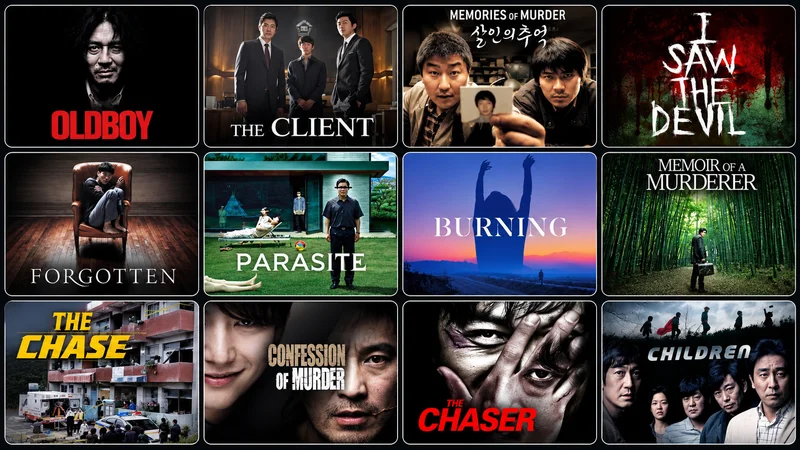
The best Korean thriller movies can make an ordinary family dinner, a late-night phone call, or an unsolved crime feel dangerous. This collection of 50 South Korean films travels from Memories of Murder and Oldboy to modern releases such as No Other Choice, The Ugly, and Wall to Wall. It includes intricate detective stories, psychological revenge dramas, supernatural mysteries, survival films, and high-pressure political conspiracies. Every selection offers a different reason to keep watching.
At CandyJar, we look beyond shocking twists and graphic violence. The strongest films give their suspense a human foundation, whether that means a parent’s desperation, an investigator’s uncertainty, or a stranger’s intrusion into everyday life. This guide separates accessible starting points from especially dark choices, so you can find something that fits your mood instead of simply chasing the most famous title.
Our guide to the best Korean thriller movies includes original South Korean films released from 2000 through 2025. The numbering is a viewing guide, not a measured ranking by audience scores. Film descriptions avoid major ending spoilers, and the historical entries are identified as dramatizations rather than documentary proof. Each title comes with three quick facts and two focused paragraphs explaining its premise, appeal, and any useful content warning.
What Makes a Korean Thriller So Compelling?
Many of the best Korean thriller movies move naturally between crime, family drama, horror, and social commentary. A detective may face an impossible case, while an apparently ordinary person makes one disastrous decision. Use these features to choose the kind of suspense you prefer:
- Unpredictable investigations: Missing people, suspicious deaths, and incomplete evidence challenge both detectives and audiences.
- Psychological conflict: Guilt, obsession, grief, and unreliable memory turn relationships into sources of danger.
- Revenge and moral compromise: Characters may pursue justice through actions that become increasingly difficult to defend.
- Everyday settings turned threatening: Apartments, workplaces, family homes, and public transport become pressure-filled environments.
- Social and institutional tension: Class inequality, corruption, surveillance, and political upheaval can shape the central conflict.
- Genre blending: Police procedurals may intersect with comedy, supernatural horror, or action without losing their central mystery.
For a first watch, try Parasite or Memories of Murder. If you enjoy complex puzzles, choose Forgotten or Decision to Leave; for intense violence, consider I Saw the Devil with a content warning. The Wailing and Exhuma suit supernatural-horror fans, while Black Bag-style espionage audiences may prefer Hunt or The Spy Gone North.
Crime Investigations and Mysteries That Stay With You
For readers discovering the best Korean thriller movies through detective stories, these titles put unanswered questions and troubled investigators at the center. Some involve police work, while others follow ordinary people who cannot accept an official explanation.
1. Memories of Murder (2003)
- Director: Bong Joon-ho
- Story focus: A series of killings in rural South Korea
- Best for: Procedural tension and dark social satire
Two very different detectives investigate murders in a rural region in the 1980s, struggling with limited evidence and investigative methods that often work against them. The officers disagree about how to identify a suspect, while the community’s fear grows. Their inability to settle on a reliable explanation creates a case that is as much about the investigators as the unidentified killer.
Bong Joon-ho balances awkward humor with dread, making every mistaken assumption feel consequential. Its connection to real historical murders gives the setting weight, although scenes and characters are dramatized. Watch for a bleak procedural that values uncertainty over easy reassurance, and avoid anyone promising a simple answer to every question.
2. Mother (2009)
- Director: Bong Joon-ho
- Story focus: A mother challenges a murder accusation
- Best for: Family desperation and unconventional detection
A devoted mother refuses to believe that her intellectually disabled adult son is responsible for a young woman’s death. With little faith in the official investigation, she begins searching for witnesses and contradictions herself. Her determination turns everyday conversations into potential clues, while her protectiveness makes her own judgments increasingly difficult to evaluate.
Kim Hye-ja creates a compelling portrait of love that may not always lead to wise choices. The film combines dark humor and a twisting crime story without making the family relationship sentimental. It works particularly well for viewers who want an amateur investigation with uncomfortable moral consequences instead of a straightforward police-hero narrative.
3. The Chaser (2008)
- Director: Na Hong-jin
- Story focus: Missing women and a desperate search
- Best for: Relentless pursuit and grim suspense
A former detective who now operates an escort business begins looking for women who have disappeared after meeting the same customer. His search collides with a police investigation that struggles to move quickly enough. The tension comes not only from finding a suspect but also from the frustrating distance between knowing something is wrong and being able to intervene.
Na Hong-jin keeps the chase immediate and unsettling, with brutal violence and a deeply cynical view of institutions. This is not a comfortable whodunit or a film for viewers avoiding distressing material. Its power lies in how small delays and failed decisions can make an already frightening situation worse.
4. The Yellow Sea (2010)
- Director: Na Hong-jin
- Story focus: A dangerous assignment across borders
- Best for: Noir survival and desperate action
A debt-ridden cab driver living in China agrees to travel to South Korea on a criminal assignment while hoping to find his missing wife. What first looks like a possible way out quickly becomes a chain of betrayals and dangerous misunderstandings. He is pursued through unfamiliar environments while struggling to discover who has manipulated the situation.
This sprawling thriller is more physically ferocious than a traditional mystery. Ha Jung-woo makes the lead’s desperation credible even when the plot becomes complicated, and the harsh setting gives the chase a distinctive identity. Choose it for exhausting, high-stakes action with a tragic human motive, not for tidy moral victories.
5. Decision to Leave (2022)
- Director: Park Chan-wook
- Story focus: A detective drawn toward a possible suspect
- Best for: Elegant romantic mystery and close observation
A detective investigating a man’s death in the mountains becomes fascinated by the dead man’s wife. The more time he spends observing her, the harder it becomes to separate his professional reasoning from private feelings. Recorded conversations, translation, and the details of everyday behavior gradually become part of a delicately constructed case.
Park Chan-wook favors longing and ambiguity over the violent spectacle associated with some of his earlier work. Tang Wei and Park Hae-il bring emotional restraint to a story where even attraction can distort evidence. Viewers willing to watch gestures and visual patterns closely will find a rewardingly sophisticated mystery.
6. Burning (2018)
- Director: Lee Chang-dong
- Story focus: A missing woman and an elusive acquaintance
- Best for: Slow-burning unease and uncertain motives
Jong-su reconnects with Hae-mi, a young woman from his past, before meeting Ben, a wealthy and enigmatic man she befriends abroad. When Hae-mi disappears from his life, Jong-su becomes preoccupied with what Ben may know. The mystery moves through social difference, loneliness, and suggestive conversations rather than a conventional chain of police evidence.
Lee Chang-dong refuses to settle every uncertainty, which is exactly why the tension lingers. Steven Yeun gives Ben an unsettling ambiguity without reducing him to a simple villain. This is one of the strongest choices for viewers who enjoy interpreting silences and contradictions, but it may frustrate anyone who expects a clearly explained final solution.
7. Forgotten (2017)
- Director: Jang Hang-jun
- Story focus: A brother returns changed after disappearing
- Best for: Memory puzzles and major reversals
Jin-seok moves into a new home with his family, but his older brother is abducted and returns days later behaving in ways that seem wrong. Jin-seok begins to investigate whether the person he knows has changed or whether he himself is missing essential information. His suspicions gradually turn the family home into a place of profound uncertainty.
This is a brisk psychological puzzle with a great deal riding on perspective and remembered events. Its revelations are central to the experience, so avoid trailers that explain late developments. Start here if you want the pleasure of assembling clues, but expect disturbing themes beneath the clever structure.
8. Memoir of a Murderer (2017)
- Director: Won Shin-yun
- Story focus: A former killer struggles with dementia
- Best for: Unreliable memories and family danger
A former serial killer living with Alzheimer’s disease fears that his daughter has become entangled with a dangerous man. His attempt to protect her is complicated by fading memory and an inability to distinguish current events from what he remembers doing himself. The story asks the audience to investigate alongside someone who may be the least dependable witness.
Sol Kyung-gu’s central performance makes an exaggerated premise emotionally engaging. The film uses memory loss to create thriller uncertainty rather than a reliable description of dementia in real life. It is an intense option for those who like characters whose fears and recollections cannot simply be taken at face value.
9. Confession of Murder (2012)
- Director: Jung Byung-gil
- Story focus: A supposed killer publishes his story
- Best for: Media spectacle and a reopened case
Years after a notorious string of killings, an attractive public figure claims responsibility and publishes a bestselling confession after the legal limitation period has expired. The detective who failed to catch the killer must confront the possibility that the celebrity narrative is hiding something. Publicity and criminal investigation become dangerously intertwined.
The film moves between police mystery, action, and pointed commentary on fame. It is less realistic than a slow procedural but has a clever premise: attention can become a weapon when the public wants a compelling villain. Choose it for energetic suspense with questions about who gets to control the story of a crime.
10. Montage (2013)
- Director: Jung Geun-sub
- Story focus: An old kidnapping case returns in a new form
- Best for: A parent’s grief and procedural clues
A child abduction remains unresolved as the statute of limitations approaches, leaving the mother and investigators with painful memories. Years later, a similar incident raises questions about whether a forgotten detail could finally matter. The film explores the strain of trying to reconstruct what happened when the original search failed.
Its emotional urgency comes from the people left behind rather than elaborate technology. The connections between past and present give the case structure, but the sadness of the original loss is never merely decorative. It is an effective pick if you like investigation stories rooted in family grief and the passage of time.
11. The Night Owl (2022)
- Director: Ahn Tae-jin
- Story focus: An acupuncturist witnesses a palace death
- Best for: Historical mystery and constrained perspective
During the Joseon era, an accomplished acupuncturist who has difficulty seeing in daylight becomes entangled in royal affairs after witnessing a disturbing incident at night. His unusual vision makes him an important witness, yet revealing what he knows could endanger him. The palace’s hierarchy turns every attempt to speak into a political calculation.
This historical thriller uses a fictionalized interpretation of the death of Crown Prince Sohyeon, not a claim to resolve a historical mystery. Ryu Jun-yeol makes the central figure’s vulnerability important to the suspense. Choose it for an atmospheric investigation where access to the truth is as risky as the discovery itself.
12. A Hard Day (2014)
- Director: Kim Seong-hun
- Story focus: A detective hides a fatal mistake
- Best for: Dark comedy and escalating blackmail
A police detective facing professional and family pressures accidentally kills a man while driving and makes a terrible decision to conceal what happened. His attempt to protect himself becomes increasingly unstable when someone appears to know his secret. Every step taken to hide one mistake creates another opportunity for exposure.
The film’s energy comes from turning a small lie into an elaborate trap, with dark humor adding to the tension. Lee Sun-kyun makes the deeply compromised protagonist watchable without asking viewers to approve of his choices. It is a fast-paced pick for anyone who enjoys watching a flawed person improvise under pressure.
Revenge, Deception, and Psychological Noir
The best Korean thriller movies about revenge and deception rarely offer simple heroes. These films consider how fear, desire, economic pressure, and betrayal can drive someone from a recognizable grievance toward destructive decisions.
13. Oldboy (2003)
- Director: Park Chan-wook
- Story focus: A man seeks the reason for prolonged captivity
- Best for: Operatic revenge and disturbing revelations
Oh Dae-su is imprisoned in a private room for fifteen years without knowing who ordered his confinement. Released just as mysteriously, he begins searching for the person responsible and the motive behind his punishment. The investigation is fueled by rage, but it gradually raises questions about whether revenge is leading him toward freedom or another carefully prepared trap.
Park Chan-wook’s film is famous for its stylized violence and shocking psychological material. The central mystery is inseparable from the damage caused by humiliation and obsession. This is a landmark of Korean revenge cinema, but its graphic and disturbing themes make it unsuitable for viewers looking for a lighter thriller.
14. Sympathy for Mr. Vengeance (2002)
- Director: Park Chan-wook
- Story focus: A desperate decision leads to escalating retaliation
- Best for: Tragic crime and moral uncertainty
A deaf factory worker searching for help for his ill sister becomes involved in a desperate plan that spirals beyond his control. Other people respond to the consequences with their own anger and grief, leaving few participants able to step away. The film follows how people who think they are acting from understandable motives can inflict terrible harm.
This is a grim and emotionally punishing thriller, deliberately lacking an easy hero. Park’s restrained moments make the violence more upsetting because its consequences cannot be brushed aside. Choose it if you want revenge cinema that questions the cycle of punishment rather than celebrating a single character’s triumph.
15. Lady Vengeance (2005)
- Director: Park Chan-wook
- Story focus: A woman prepares an elaborate reckoning
- Best for: Stylized revenge and shared responsibility
After spending years in prison for a crime connected to the disappearance of a child, Lee Geum-ja pursues a long-prepared plan against the man she holds responsible. People she met behind bars become part of her efforts, while the emotional stakes grow more complicated than personal vindication. Her outward composure conceals a fierce determination.
Lee Young-ae brings an unusual mix of elegance, vulnerability, and anger to the lead. The story’s vivid design does not soften the violence or the painful ethical questions it raises. Watch it after Oldboy if you want another Park Chan-wook revenge story that asks whether punishment can meaningfully repair harm.
16. I Saw the Devil (2010)
- Director: Kim Jee-woon
- Story focus: An agent hunts a brutal killer
- Best for: Extreme violence and consuming vengeance
After his fiancée is murdered, a security agent begins pursuing the killer with a plan that goes far beyond arrest. The conflict becomes a cycle of pursuit and retaliation in which the supposed avenger increasingly resembles the person he wants to punish. The film repeatedly tests whether control over an enemy is worth the consequences for everyone else.
Lee Byung-hun and Choi Min-sik create a frightening confrontation, and Kim Jee-woon gives the action a relentless physical intensity. This is among the darkest selections here, with graphic violence that should not be understated. Its central question is moral rather than procedural: when does revenge destroy the person seeking it?
17. The Handmaiden (2016)
- Director: Park Chan-wook
- Story focus: A con unfolds inside a wealthy household
- Best for: Changing perspectives and intricate deception
In 1930s Korea under Japanese rule, a young woman is hired as a maid while secretly participating in a plan to deceive an heiress. Relationships develop in ways the conspirators did not fully anticipate, and familiar events take on different meanings when the story changes perspective. Power, storytelling, and control over personal identity become part of the suspense.
The period production design is sumptuous, but the real pleasure lies in discovering how carefully the characters are constructing impressions for one another. The film contains explicit sexual content and coercive dynamics, making it an adult choice. It rewards viewers who enjoy elaborate confidence games with emotional stakes.
18. A Bittersweet Life (2005)
- Director: Kim Jee-woon
- Story focus: A trusted enforcer disobeys his boss
- Best for: Melancholy gangster noir and betrayal
Sun-woo is a disciplined enforcer whose employer orders him to keep watch over a younger woman. When the assignment collides with his own judgment, a seemingly contained disagreement becomes an escalating conflict with the criminal organization he serves. The story turns questions of pride, loyalty, and attachment into a violent struggle for survival.
Lee Byung-hun gives the central figure a guarded emotional presence, making his choices compelling even when they become destructive. Kim Jee-woon’s elegant compositions contrast with sudden brutality. It is ideal for viewers who like noir stories about the cost of refusing to follow an order, not an investigation centered on solving a murder.
19. New World (2013)
- Director: Park Hoon-jung
- Story focus: An undercover officer faces a gang succession
- Best for: Undercover tension and shifting allegiances
Police officer Ja-sung has spent years inside a major criminal organization when the leader’s death creates a struggle for control. As rival factions compete, his superiors demand more from an identity that is already consuming his personal life. He must decide whether any side truly sees him as a person rather than a tool.
Lee Jung-jae, Choi Min-sik, and Hwang Jung-min bring different kinds of authority to a story about conflicting loyalties. The film’s tension is strongest when Ja-sung’s choices narrow and seemingly friendly gestures become threats. Watch it if you enjoy intricate crime-world politics with psychological stakes.
20. The Gangster, the Cop, the Devil (2019)
- Director: Lee Won-tae
- Story focus: A gangster and detective pursue one killer
- Best for: Unlikely alliance and hard-hitting action
A powerful gangster survives an attack by a serial killer, making him an unusual witness in a police investigation. A determined detective wants the killer arrested, while the gangster has his own reasons to seek retaliation. Their cooperation is practical and uneasy, giving the pursuit a distinctive mixture of competition and urgency.
Ma Dong-seok’s commanding screen presence helps the film balance menace and momentum. The case is structured around a clear pursuit rather than an intricate psychological puzzle, and violent confrontations are central. It is an easy choice for viewers who want Korean crime action with a memorable reluctant partnership.
21. No Other Choice (2025)
- Director: Park Chan-wook
- Story focus: A laid-off worker turns job hunting into a crime
- Best for: Pitch-black workplace satire and moral collapse
Man-su, a paper-industry employee with decades of experience, loses the job that has supported his comfortable family life. As opportunities disappear and his home feels threatened, he begins treating rival applicants as obstacles to be eliminated. An ordinary employment crisis becomes a disturbing sequence of increasingly extreme personal decisions.
Lee Byung-hun anchors a darkly comic story about financial anxiety, self-justification, and violence. Park Chan-wook deliberately makes the premise absurd without removing its human discomfort. Choose it for a recent thriller that blends satire with criminal escalation, while expecting a much stranger tone than a conventional serial-killer investigation.
22. Helpless (2012)
- Director: Byun Young-joo
- Story focus: A bride-to-be disappears without explanation
- Best for: Identity mystery and a troubled past
While traveling with her fiancé, a woman vanishes during a stop, leaving him with questions about where she went and whether he truly knew her. His search reveals contradictions in her personal history that turn an apparent missing-person case into something deeper. Ordinary documents and relationships become clues to a life he may never have understood.
Based on a novel by Miyuki Miyabe, this Korean adaptation makes uncertainty about identity its driving force. The mystery also reflects social and economic vulnerability rather than relying solely on one villain’s cleverness. It is a strong choice for viewers who enjoy personal investigations that uncover uncomfortable histories.
23. Parasite (2019)
- Director: Bong Joon-ho
- Story focus: Two families separated by wealth and opportunity
- Best for: Social suspense with sharp tonal changes
Members of a financially struggling family gradually secure jobs in the comfortable home of a wealthy household, concealing how they are connected to one another. Their arrangement seems successful until unexpected complications expose the fragility of the deception. Small domestic details become threatening as the gap between appearances and reality widens.
Parasite moves between comedy, class drama, and thriller with remarkable control. Its tension is rooted in the different risks people face when they possess very unequal resources. This is an accessible introduction to contemporary Korean cinema, but the material becomes much darker than its playful opening might suggest.
Horror, Survival, and Everyday Paranoia
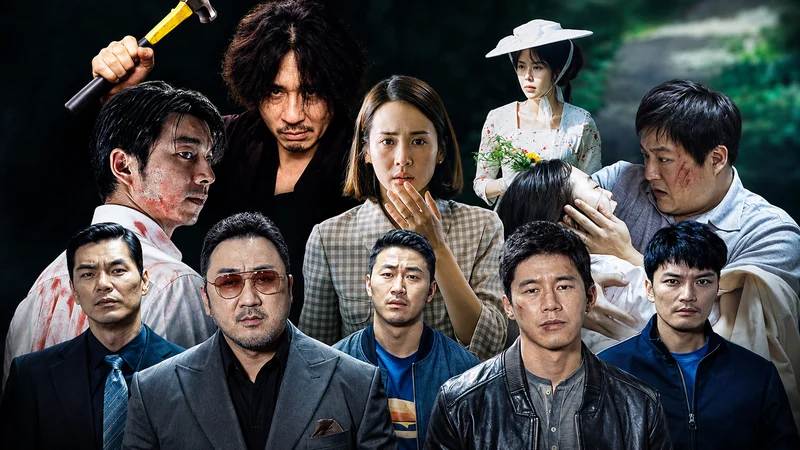
Several of the best Korean thriller movies blend horror with suspense, turning homes, villages, and shared spaces into places where no explanation seems safe. If you dislike frightening imagery or graphic violence, read the viewing notes before choosing from this group.
24. The Wailing (2016)
- Director: Na Hong-jin
- Story focus: Unexplained illness and deaths strike a village
- Best for: Folk horror and competing explanations
A rural police officer investigates disturbing incidents after a stranger arrives in the area, and the events become frighteningly personal when his daughter is affected. Rumors, rituals, and conflicting accounts complicate his efforts to understand whether the threat is human or supernatural. The investigation becomes increasingly shaped by what people believe rather than what they can establish.
The Wailing uses its remote setting and slow buildup to create a sense of helplessness. Its long runtime allows uncertainty to deepen without promising a comfortable explanation. Viewers who like supernatural dread and moral ambiguity will find plenty to discuss, but the imagery and violence are intense.
25. A Tale of Two Sisters (2003)
- Director: Kim Jee-woon
- Story focus: Sisters return to a troubled family home
- Best for: Gothic atmosphere and unreliable experience
Two sisters return to their father’s house, where their relationship with a stepmother and their own painful memories create a tense domestic environment. Unsettling incidents suggest that something about the family’s past has not been faced. The home itself becomes a source of anxiety, with ordinary spaces loaded with emotional meaning.
Kim Jee-woon blends psychological drama with ghost-story imagery, carefully balancing what the characters feel and what the audience can confirm. Its emotional themes make the mystery more lasting than the isolated scares. Choose it for a haunting family story with a deliberate pace and disturbing revelations.
26. The Host (2006)
- Director: Bong Joon-ho
- Story focus: A river monster attacks a family
- Best for: Creature-feature suspense and social satire
A mysterious creature emerges from the Han River and seizes a young girl, sending her family into a desperate effort to rescue her. Their search is complicated by authorities and institutions that do not always respond as the family expects. The monster threat gives the story its urgency, but the family members’ decisions supply its emotional center.
The Host is frightening, funny, and surprisingly sad, sometimes within the same sequence. Bong Joon-ho uses a creature movie to examine institutional confusion and the resilience of ordinary people. It is a strong pick for viewers who enjoy survival stakes and social commentary alongside monstrous spectacle.
27. Train to Busan (2016)
- Director: Yeon Sang-ho
- Story focus: Passengers face a fast-moving zombie outbreak
- Best for: Contained survival and emotional urgency
A father traveling with his daughter boards a train just as an outbreak spreads through South Korea. Passengers must navigate cramped carriages, improvised barriers, and difficult choices about whether to help others. The journey becomes a struggle between cooperation and selfishness as safe space disappears.
The train setting gives the action remarkable clarity, and the parent-child relationship makes the stakes personal. Yeon Sang-ho combines intense physical suspense with an accessible emotional story. This is a strong starting point for action-horror audiences, although the violence and grief can be upsetting.
28. The Call (2020)
- Director: Lee Chung-hyeon
- Story focus: Two women connect by telephone across time
- Best for: Time-bending psychological mystery
A woman staying in her childhood home receives calls from another woman who appears to live in the same house decades earlier. Their conversations seem to offer a chance to change painful events, but the connection gradually reveals more dangerous possibilities. A familiar object becomes the source of a thriller built around cause and consequence.
The film’s shifting timeline rewards attention without requiring elaborate scientific explanation. Park Shin-hye and Jeon Jong-seo create a memorable contrast between hope and menace. Its puzzle-like structure makes it a natural companion to our best mystery thriller movie guide, especially for viewers who enjoy timelines that change the meaning of earlier scenes.
29. Sleep (2023)
- Director: Jason Yu
- Story focus: A husband’s sleepwalking turns frightening
- Best for: Domestic horror and marital uncertainty
Newlyweds Hyun-su and Soo-jin are alarmed when he begins behaving strangely while asleep. As his nocturnal episodes become harder to control, Soo-jin worries about the safety of their household and their future child. Medical explanations and spiritual interpretations offer competing ways to understand an increasingly intolerable situation.
Rather than relying on a large cast or elaborate mythology, Sleep uses one apartment and a marriage under stress. The everyday realism of the setting makes each new incident more unnerving. It is a rewarding pick for viewers who prefer creeping domestic anxiety to nonstop gore.
30. Exhuma (2024)
- Director: Jang Jae-hyun
- Story focus: A burial site is tied to a family’s misfortune
- Best for: Occult investigation and Korean folk traditions
A team of shamans, a geomancer, and a funeral specialist become involved in relocating an ancestral grave after a wealthy family reports disturbing experiences. What initially resembles an unusual professional assignment exposes a deeper source of danger. The investigation connects ritual knowledge, history, and physical discovery in a way that gradually expands the stakes.
Exhuma stands out for treating specialized cultural practices as part of the mystery rather than generic decoration. Choi Min-sik and Kim Go-eun bring different kinds of authority to the group. Choose it if you like supernatural thrillers with investigative structure and a rich sense of local tradition.
31. The Priests (2015)
- Director: Jang Jae-hyun
- Story focus: Two priests confront an apparent possession
- Best for: Religious horror and escalating uncertainty
A senior priest and a younger assistant become involved in an exorcism attempt concerning a girl whose condition defies easy explanation. Their preparations are marked by doubt, professional risk, and uncertainty about whether they understand the threat. Much of the film’s tension grows from the limited time and trust available to people facing something they fear.
The Priests leans into religious ritual and claustrophobic suspense more than detective procedure. It is a useful earlier film to watch before Exhuma if you enjoy how Jang Jae-hyun connects belief with frightening consequences. The themes may be uncomfortable for viewers sensitive to possession and religious horror.
32. Svaha: The Sixth Finger (2019)
- Director: Jang Jae-hyun
- Story focus: An investigator examines a religious sect
- Best for: Occult mystery and moral ambiguity
A pastor who studies suspicious religious groups begins investigating a secretive organization while unusual incidents draw attention to its beliefs and members. His inquiry gradually links religious teachings, personal history, and violent events. The story asks viewers to distinguish between what people sincerely believe and what others might exploit.
The film is dense and deliberately mysterious, making it better for audiences who enjoy mythology and gradual revelations. Its religious themes are used for a fictional thriller rather than a reliable account of real communities. If you liked the investigative side of Exhuma, this is another worthwhile genre blend.
33. Concrete Utopia (2023)
- Director: Um Tae-hwa
- Story focus: Apartment residents survive a catastrophe
- Best for: Disaster suspense and difficult group choices
After a devastating earthquake leaves much of Seoul in ruins, one apartment building remains standing. Its residents organize to survive, but questions about who may enter and who controls resources quickly create conflict. The greatest danger is not always the destroyed city outside; the surviving community’s decisions become increasingly consequential.
Lee Byung-hun leads a tense ensemble story about fear, belonging, and power under extreme pressure. It is less of a detective mystery than a social survival thriller, but the uncertainty about what people will do next is gripping. Choose it for morally uncomfortable group dynamics rather than traditional action heroics.
34. Midnight (2021)
- Director: Kwon Oh-seung
- Story focus: A deaf woman becomes a killer’s target
- Best for: Urban pursuit and visual suspense
A young woman who is deaf accidentally becomes involved in a dangerous encounter with a serial killer, who pursues her through city streets and residential areas. Communication barriers and the difficulty of attracting attention make ordinary public places frightening. She must rely on quick decisions and awareness of her surroundings to survive.
The film uses the protagonist’s perspective to rethink familiar chase scenes, although its situations are heightened for suspense. Jin Ki-joo gives the lead a determined presence. This is a good choice for viewers who want a fast, self-contained pursuit thriller rather than a long investigation.
35. Door Lock (2018)
- Director: Lee Kwon
- Story focus: A woman suspects someone enters her apartment
- Best for: Apartment paranoia and personal safety
A woman living alone notices unsettling signs suggesting that a stranger may have accessed her home. As suspicious incidents accumulate, she begins questioning whether the place meant to protect her is secure. Her attempts to obtain help are complicated by how ordinary and difficult to prove the warning signs initially appear.
Door Lock works from a simple modern anxiety: a home can feel unsafe long before there is definitive evidence of an intruder. The movie favors immediate suspense and vulnerability over elaborate symbolism. It is an accessible choice for viewers drawn to stalking and home-invasion stories.
36. Unlocked (2023)
- Director: Kim Tae-joon
- Story focus: A lost smartphone becomes an entry point for surveillance
- Best for: Digital privacy and identity theft
An ordinary office worker loses her phone, unknowingly giving a malicious stranger access to information about her daily routines, contacts, and private communications. The device connects separate parts of her life that she had assumed were safe. Her efforts to understand the threat become a race against someone who already knows far too much.
Netflix’s thriller turns familiar digital habits into practical vulnerabilities without needing futuristic technology. Chun Woo-hee gives the central character a recognizable everyday life, raising the emotional stakes. Choose it if you like modern suspense about how easily a stranger can manipulate trust.
37. Target (2023)
- Director: Park Hee-kon
- Story focus: A secondhand purchase leads to stalking
- Best for: Marketplace scams and escalating fear
After buying a used appliance through an online marketplace, a woman discovers she may have been deceived and confronts the seller. What begins as an irritating consumer dispute becomes a frightening campaign of harassment. Personal information and the anonymity of online commerce make it increasingly difficult to identify where the threat will emerge.
The premise is immediately recognizable to anyone who has bought something from a stranger online. Rather than relying on an extravagant conspiracy, Target builds danger from a mundane transaction. It pairs well with Unlocked for a double feature about ordinary technology becoming an instrument of intimidation.
Political Power, Spies, and Institutional Secrets
Political conflict and intelligence work also shape the best Korean thriller movies. Here the danger emerges from borders, hidden agendas, and institutions whose public explanations may differ from what people experience.
38. Joint Security Area (2000)
- Director: Park Chan-wook
- Story focus: A deadly encounter at the Korean border
- Best for: Conflicting testimony and human relationships
After a shooting at the border between North and South Korea, an investigator examines statements from soldiers who appear unable to agree on what happened. The inquiry gradually exposes relationships that cannot be openly acknowledged. The case is a mystery, but its deeper tension lies in how political rules affect personal loyalty.
Park Chan-wook combines procedural suspense with a sensitive account of the people on both sides of the divide. Its fictional characters inhabit a recognizable geopolitical setting. This is a good option for viewers who want a political mystery with an emotional center rather than a simple military-action film.
39. The Age of Shadows (2016)
- Director: Kim Jee-woon
- Story focus: Resistance operatives face colonial police
- Best for: Undercover betrayal and wartime suspense
During Japanese colonial rule in Korea, a police officer becomes involved in efforts to identify members of the independence movement. A plot to transport explosives creates opportunities for deception on multiple sides, and the officer’s loyalties become increasingly complicated. The pressure of maintaining an identity shapes nearly every important encounter.
Kim Jee-woon gives the period setting an elegant sense of scale without abandoning the intimate fear of being discovered. The film draws on historical circumstances but dramatizes individual operations. Watch it for a compelling mixture of political stakes, suspenseful meetings, and undercover tension.
40. The Spy Gone North (2018)
- Director: Yoon Jong-bin
- Story focus: A South Korean operative enters a commercial cover
- Best for: Talk-driven espionage and fragile trust
In the 1990s, an intelligence operative adopts the identity of a businessman to make contact with officials in North Korea. The mission depends on credible professional relationships and a willingness to listen to what others reveal indirectly. As contacts deepen, political interests begin challenging the tidy account of who benefits from cooperation.
The film is notably patient, making negotiations feel as dangerous as a physical chase. Hwang Jung-min brings warmth and caution to an operative who must keep his emotions concealed. Inspired by a real espionage case, it remains a dramatic interpretation rather than a complete historical record.
41. Hunt (2022)
- Director: Lee Jung-jae
- Story focus: Two intelligence officials search for a mole
- Best for: High-energy counterespionage and internal rivalry
Two senior South Korean intelligence officers pursue evidence of infiltration within their own agency, with suspicion gradually moving closer to their departments. The investigation unfolds amid politically sensitive operations and a conflict about how to interpret each new lead. Each officer’s certainty becomes harder to trust as the stakes rise.
Lee Jung-jae directs and stars in a film that combines fast physical action with complicated intelligence politics. The density of the plot rewards close attention, especially when characters switch tactics. It is a natural choice for viewers who enjoy espionage films that make colleagues as suspicious as enemies.
42. 1987: When the Day Comes (2017)
- Director: Jang Joon-hwan
- Story focus: A death in custody and attempts to suppress evidence
- Best for: Historical drama with escalating urgency
The death of a student during police interrogation sets off efforts to conceal what happened, while prosecutors, journalists, activists, and ordinary citizens become involved in bringing information into the open. Rather than following one detective, the film shows how many different choices contribute to the circulation of evidence. The political consequences grow beyond the original incident.
Based on documented events connected to South Korea’s June 1987 democratic movement, the movie still dramatizes conversations and individual experiences. Its ensemble structure makes witness testimony feel urgent. Choose it for historical suspense in which learning and sharing the truth can be dangerous acts.
43. 12.12: The Day (2023)
- Director: Kim Sung-su
- Story focus: A military power struggle in 1979 Seoul
- Best for: Command decisions and historical crisis
Following the assassination of South Korea’s president in 1979, competing military leaders become involved in a rapidly escalating confrontation. Orders, communications, and control of forces turn the night into a race with consequences well beyond one military base. The film uses a compressed timeframe to show officials making decisions with incomplete and conflicting information.
Hwang Jung-min and Jung Woo-sung anchor opposing positions within a dramatization of the December 12 military coup. The stakes are historical, but personal motives and dialogue are cinematic interpretations. It is an excellent choice for viewers interested in tense institutional decisions rather than mysteries about a single murderer.
44. The Terror Live (2013)
- Director: Kim Byung-woo
- Story focus: A broadcaster receives a threatening live call
- Best for: Real-time media pressure and public danger
A disgraced news presenter receives a phone call from someone claiming responsibility for an explosion and promising further violence. The journalist recognizes the opportunity to reclaim professional status, even as the situation becomes increasingly dangerous. The mostly confined broadcast setting forces decisions about what to reveal and whom to believe.
Ha Jung-woo carries much of the story through reactions inside the studio, turning limited space into a pressure cooker. The film explores the clash between news ratings, emergency response, and personal survival. It is a particularly effective pick when you want intense momentum without an elaborate network of locations.
45. Inside Men (2015)
- Director: Woo Min-ho
- Story focus: Political and media figures are tied to corruption
- Best for: Crime conspiracy and power struggles
A political fixer, a prosecutor, and influential figures in the media and business world become entangled in a struggle over damaging information. Each person sees the evidence as a route to influence, protection, or revenge. The mystery becomes less about discovering one secret than learning who has the power to use it.
Lee Byung-hun and Cho Seung-woo give the competing interests distinct energy. The film’s cynical tone and adult content make it darker than a straightforward courtroom thriller. It suits viewers who enjoy complicated alliances and the uneasy overlap between institutions and organized crime.
Recent Korean Thrillers With Fresh Twists
Recent entries show how the best Korean thriller movies keep finding new sources of unease, from social-media personas to housing anxiety and long-buried family secrets. These five films were released in 2024 or 2025.
46. Following (2024)
- Director: Kim Se-hwi
- Story focus: A voyeur becomes a murder suspect
- Best for: Social-media deception and a compromised witness
A real estate agent who secretly enters clients’ homes becomes fascinated by a social-media personality whose private life contradicts her curated online image. When he finds her apparently dead, he is unable to report the incident without revealing his own conduct. Soon the evidence seems to point back toward him, forcing him into a frantic search for an explanation.
Following builds its suspense around a protagonist whose behavior is already indefensible, making the audience’s sympathy deliberately uneasy. Byun Yo-han and Shin Hye-sun bring energy to the shifting appearances. Choose it for a modern mystery about privacy, public images, and the danger of becoming trapped by one’s own secrets.
47. The Plot (2024)
- Director: Lee Yo-sup
- Story focus: Killings are engineered to look accidental
- Best for: Elaborate schemes and professional paranoia
Young-il leads a team that disguises contract murders as ordinary accidents, relying on precise timing and careful manipulation of circumstances. A new assignment involving a prominent target introduces variables that threaten the group’s confidence. The more he studies what might go wrong, the more uncertain he becomes about whether the operation is fully under his control.
This Korean thriller puts planning and suspicion at the center rather than an ordinary police search. Kang Dong-won gives the lead a cool exterior that starts to fray under pressure. Its premise is adapted from the 2009 Hong Kong film Accident, making it an intriguing pick for viewers who like controlled systems disrupted by one detail.
48. Revelations (2025)
- Director: Yeon Sang-ho
- Story focus: A pastor and detective pursue a missing-person case
- Best for: Faith, guilt, and conflicting interpretations
A pastor becomes convinced that a visitor to his church is responsible for a disappearance and interprets that belief as a divine command. Meanwhile, a detective dealing with traumatic memories investigates the same suspect and the pastor’s involvement. Their different understandings of truth turn an already urgent case into a clash of personal conviction and evidence.
Adapted from a comic by Yeon Sang-ho and Choi Gyu-seok, Revelations examines how certainty can become dangerous when it outruns proof. Ryu Jun-yeol and Shin Hyun-been anchor the competing viewpoints. It is especially appealing if you enjoy crime mysteries that draw tension from psychological and moral conflict.
49. The Ugly (2025)
- Director: Yeon Sang-ho
- Story focus: Remains found decades after a woman vanished
- Best for: Family history and a long-buried mystery
A young man whose mother disappeared forty years earlier learns that her remains have been found. While a documentary crew is filming his visually impaired father, the discovery sends him searching for people who knew his mother and may remember what happened. His investigation gradually reveals uncomfortable details about family, labor, and how someone can be erased from collective memory.
The Ugly is an intimate and unsettling mystery rather than an action film. Park Jeong-min and Kwon Hae-hyo anchor a story about the distance between a loved one’s public image and private history. Choose it for a recent thriller that treats a cold case as an opportunity to examine long-neglected pain.
50. Wall to Wall (2025)
- Director: Kim Tae-joon
- Story focus: A new homeowner is tormented by noise
- Best for: Apartment anxiety and escalating mistrust
Woo-seong has committed nearly everything he owns to purchasing an apartment, only to find that unexplained noises from neighboring floors make his home unbearable. As he seeks answers, financial pressure and hostile interactions with other residents intensify his uncertainty. The dream of secure housing becomes a source of emotional and practical danger.
Kang Ha-neul brings strain and frustration to a familiar modern situation, while the enclosed apartment setting gives the mystery a claustrophobic quality. From the director of Unlocked, Wall to Wall is a good pick for viewers who prefer everyday paranoia and secrets close to home rather than serial-killer mythology.
Frequently Asked Questions
Which Korean thriller movie should I watch first?
Parasite is an accessible introduction if you like social tension and unexpected changes of tone. Memories of Murder offers a darker police investigation, while Forgotten is a good choice for viewers seeking a fast psychological puzzle. Start with Train to Busan if you prefer action and survival stakes.
What are the best Korean thriller movies with unexpected twists?
Forgotten, Oldboy, The Handmaiden, The Call, and Decision to Leave are particularly rewarding if you enjoy changing your interpretation of earlier scenes. Go in without watching detailed ending explanations. Not every film resolves its mysteries in a neat or comforting way.
Are there Korean thrillers with less graphic violence?
Decision to Leave, Burning, and Wall to Wall generally emphasize psychological tension more than relentless physical violence, although they still contain mature or disturbing material. For especially graphic viewing, exercise caution with I Saw the Devil, Oldboy, and The Chaser. Check current content guidance for individual sensitivities.
Which Korean thrillers are based on real historical events?
Memories of Murder draws from historical murder cases, while 1987: When the Day Comes and 12.12: The Day dramatize events from modern South Korean history. The Spy Gone North also draws from a real espionage case. Each film uses fictionalization, so none should replace a documentary or primary historical source.
Where can I watch Korean thriller movies with English subtitles?
Licensed streaming and rental availability depend on your region and may change. Check the exact movie title and year on a legitimate service, then confirm Korean audio and English subtitle options. Netflix officially distributes Unlocked, Revelations, and Wall to Wall in supported markets, but availability elsewhere should be checked separately.
Final Thoughts
The best Korean thriller movies make their unsettling questions feel personal. A parent challenges an accusation in Mother, a detective confronts his own judgment in Decision to Leave, and a homeowner loses peace of mind in Wall to Wall. Choose a case you want to understand, a moral dilemma you want to debate, or a nightmare you want to survive. The strongest entries make the suspense matter long after the immediate danger has passed.
Julian Parker is a dedicated entertainment writer at CandyJar, specializing in short dramas, captivating storylines, and trending mini-series. He shares insightful reviews, fresh perspectives, and thoughtful recommendations to help viewers discover stories worth watching.