
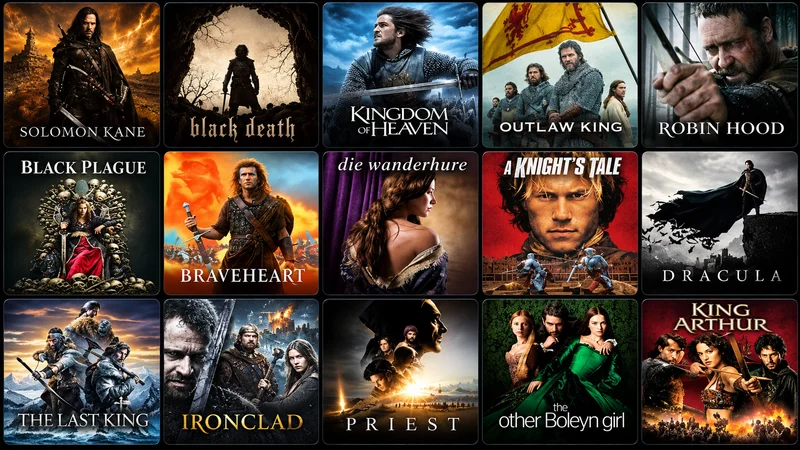
The best medieval fantasy movies transport viewers to extraordinary worlds filled with ancient kingdoms, legendary warriors, powerful sorcerers, and mysterious creatures. From the sweeping battles of The Lord of the Rings to the haunting Arthurian journey of The Green Knight, these films transform familiar medieval imagery into unforgettable adventures. This collection features 50 movies spanning epic quests, magical fairy tales, animated fantasy, dark legends, and international mythology.
At CandyJar, we look for fantasy films that offer more than impressive castles and sword fights. The strongest stories build compelling worlds around their characters, whether those characters are reluctant heroes, ambitious rulers, misunderstood monsters, or ordinary people discovering extraordinary abilities. Some selections are suitable for family viewing, while others explore violence, betrayal, death, and difficult moral choices.
This guide to the best medieval fantasy movies covers releases from 1963 through 2025. Alongside films inspired by European medieval traditions, it includes fictional kingdoms and mythological settings influenced by Asian and other storytelling cultures. Not every film depicts the historical Middle Ages. Some create entirely imaginary civilizations using medieval-style architecture, weaponry, and social structures. Each recommendation includes three quick facts and two spoiler-conscious paragraphs describing its appeal.
What Makes a Great Medieval Fantasy Movie?
The best medieval fantasy movies combine imaginative world-building with recognizable human experiences. Their characters might encounter magical creatures or wield enchanted weapons, but their most important conflicts often involve courage, loyalty, ambition, and sacrifice.
Several defining elements make this type of fantasy especially appealing:
- Medieval-inspired kingdoms and castles: Fortresses, villages, royal courts, and ancient cities establish worlds shaped by tradition, hierarchy, and territorial conflict.
- Knights, warriors, and legendary heroes: Swordsmanship, quests, military alliances, and codes of honor create opportunities for adventure and personal growth.
- Magic and supernatural powers: Wizards, enchanted objects, curses, prophecies, and mysterious rituals influence the characters’ choices.
- Dragons and mythical creatures: Fantastic beasts can become terrifying enemies, unexpected allies, or symbols of the world’s deeper mysteries.
- Epic quests and dangerous journeys: Characters travel through unfamiliar lands to recover treasures, rescue others, defeat powerful enemies, or discover their identities.
- Political struggles and royal succession: Rival kingdoms, disputed thrones, family betrayals, and competing rulers provide conflicts beyond simple battles.
- Folklore and mythology: Stories inspired by Arthurian legend, Norse traditions, Celtic folklore, and Asian mythology introduce distinctive magical beliefs.
For an epic adventure, begin with The Lord of the Rings or Willow. Choose The Green Knight for a slower, symbolic journey, Dungeons & Dragons: Honor Among Thieves for humor and action, and Damsel for a more dangerous fantasy survival story. Animated options such as The Secret of Kells and Princess Mononoke offer equally rich worlds through different visual styles.
Epic Kingdoms and Legendary Fantasy Adventures
When audiences imagine the best medieval fantasy movies, sprawling kingdoms and world-changing quests often come to mind first. These films feature enormous landscapes, complex alliances, ancient prophecies, and characters whose personal decisions can determine the future of entire civilizations.
1. The Lord of the Rings: The Fellowship of the Ring (2001)
- Director: Peter Jackson
- Fantasy elements: Middle-earth, magical rings, wizards, and ancient races
- Best for: Immersive world-building and the beginning of an epic quest
Frodo Baggins inherits a mysterious ring whose power threatens the future of Middle-earth. After learning that the artifact is connected to the Dark Lord Sauron, he leaves the peaceful Shire and joins a fellowship of warriors, hobbits, an elf, a dwarf, and a wizard. Their journey takes them through dangerous lands where the ring’s influence creates both external threats and internal conflict.
Peter Jackson introduces Tolkien’s world with remarkable attention to landscapes, cultures, and character relationships. The film succeeds because its enormous stakes remain connected to Frodo’s vulnerability and the friendships supporting him. It is the natural starting point for anyone unfamiliar with the trilogy, combining intimate moments with the promise of a much larger adventure.
2. The Lord of the Rings: The Two Towers (2002)
- Director: Peter Jackson
- Fantasy elements: Rohan, Ents, dark armies, and the One Ring
- Best for: Large-scale battles and parallel character journeys
Following the separation of the Fellowship, Frodo and Sam continue toward Mordor with an uneasy new guide, while Aragorn, Legolas, and Gimli become involved in the defense of Rohan. As Saruman’s forces prepare to attack, the struggle against Sauron’s growing influence becomes more complicated. Different groups face dangers that test their courage and loyalty.
The Two Towers expands the series through the spectacular Battle of Helm’s Deep while continuing to develop the personal consequences of the ring’s power. Gollum adds psychological complexity to Frodo’s journey, and the Ents introduce another perspective on the conflict. The film balances intimate storytelling with the scale expected from an epic fantasy sequel.
3. The Lord of the Rings: The Return of the King (2003)
- Director: Peter Jackson
- Fantasy elements: Ancient kingdoms, supernatural enemies, and the final quest
- Best for: Emotional resolution and monumental fantasy spectacle
Middle-earth approaches a decisive confrontation as Sauron’s armies threaten Gondor and Frodo struggles to complete his mission. Aragorn must confront his responsibilities as a potential king, while his companions face increasingly dangerous battles. The fate of the world rests not only on military strength but also on the endurance of characters operating far from the battlefield.
The Return of the King delivers enormous visual spectacle without abandoning the relationships established in the earlier films. Its themes of friendship, sacrifice, and the burdens of leadership give the conclusion emotional depth. Viewers should experience the complete trilogy in order, since the final installment depends heavily on the journeys that precede it.
4. The Hobbit: An Unexpected Journey (2012)
- Director: Peter Jackson
- Fantasy elements: Dwarven kingdoms, trolls, goblins, and a wizard
- Best for: A lighter introduction to Middle-earth adventure
Bilbo Baggins is persuaded by Gandalf to join a company of dwarves led by Thorin Oakenshield. Their goal is to reclaim the Lonely Mountain, the ancestral homeland taken from them by the dragon Smaug. Bilbo initially doubts his ability to survive such a dangerous expedition, but his journey gradually reveals unexpected courage and resourcefulness.
Compared with The Lord of the Rings, this opening chapter has a more playful adventure tone. Martin Freeman gives Bilbo a recognizable mixture of nervousness, curiosity, and determination. Although the adaptation expands Tolkien’s shorter novel substantially, it remains an inviting choice for viewers who enjoy discovering fantastic creatures and unfamiliar landscapes alongside an inexperienced hero.
5. The Hobbit: The Desolation of Smaug (2013)
- Director: Peter Jackson
- Fantasy elements: Mirkwood, elves, ancient ruins, and Smaug
- Best for: Dragon fantasy and dangerous encounters
Bilbo and the dwarves continue their journey toward the Lonely Mountain, traveling through a hostile forest and encountering communities with different interests in their quest. As they approach their destination, the danger posed by Smaug becomes increasingly immediate. Bilbo’s unusual abilities make him essential to the company’s plans.
The film’s greatest attraction is its enormous dragon, brought to life through detailed visual effects and Benedict Cumberbatch’s performance. The confrontation between Bilbo and Smaug turns conversation into a contest of intelligence and deception. The Desolation of Smaug is especially rewarding for viewers who enjoy fantasy creatures with distinctive personalities rather than monsters that exist only to be defeated.
6. The Hobbit: The Battle of the Five Armies (2014)
- Director: Peter Jackson
- Fantasy elements: Dwarven treasure, rival armies, and mythical creatures
- Best for: Kingdom politics and large-scale fantasy warfare
The future of the Lonely Mountain becomes uncertain as dwarves, elves, humans, and other forces pursue competing interests. Thorin’s determination to protect his inheritance creates conflict even among potential allies. Bilbo must navigate a situation in which friendship, greed, and the possibility of war threaten the goals that originally united the expedition.
This final installment emphasizes battle and political consequences more than the exploratory tone of An Unexpected Journey. Its depiction of how treasure can distort judgment gives the large conflict a recognizable personal dimension. Watch it after the previous Hobbit films, since the emotional stakes depend on understanding Thorin’s ambitions and Bilbo’s changing loyalties.
7. The Lord of the Rings: The War of the Rohirrim (2024)
- Director: Kenji Kamiyama
- Fantasy elements: Rohan, ancient fortresses, and legendary warriors
- Best for: Animated fantasy warfare and Middle-earth history
Set generations before the events of The Lord of the Rings, this animated story explores a crisis involving King Helm Hammerhand and the kingdom of Rohan. A personal dispute escalates into a devastating conflict, forcing Helm’s daughter Héra to confront the danger threatening her family and people. The battle for survival places the ancient fortress of the Hornburg at the center of the story.
The film brings a Japanese animation approach to Tolkien’s established world, emphasizing character expressions and large battlefield compositions. Its appeal lies in expanding Rohan’s history rather than repeating Frodo’s journey. Viewers familiar with Helm’s Deep will appreciate the setting, although the film follows a largely independent narrative.
8. The Chronicles of Narnia: The Lion, the Witch and the Wardrobe (2005)
- Director: Andrew Adamson
- Fantasy elements: Talking animals, ancient prophecy, and the White Witch
- Best for: Family fantasy and the discovery of a magical kingdom
Four siblings evacuated from wartime London discover a wardrobe that leads to Narnia, a magical land suffering under the rule of the White Witch. Their arrival becomes connected to an ancient prophecy, drawing them into a struggle involving talking animals, mythical creatures, and the powerful lion Aslan. Each child must find a place within a world unlike anything they have experienced.
The film balances accessible adventure with themes of betrayal, forgiveness, and courage. Its wintry landscapes and castle settings make Narnia feel like a medieval-inspired kingdom suspended in enchantment. It is a particularly suitable introduction to fantasy for families, though some battle scenes and supernatural threats may be frightening for younger children.
9. The Chronicles of Narnia: Prince Caspian (2008)
- Director: Andrew Adamson
- Fantasy elements: Ancient ruins, royal succession, and magical creatures
- Best for: Castle battles and the restoration of a kingdom
The Pevensie siblings return to Narnia and discover that centuries have passed within the magical realm. The old Narnian world has been suppressed by the Telmarines, and Prince Caspian seeks their help against a ruler determined to control the throne. Their mission involves rebuilding alliances and confronting the consequences of a kingdom’s forgotten history.
Prince Caspian places more emphasis on military conflict and political power than the first film. The ruined castles and divided communities give the setting a distinctly medieval atmosphere. Its strongest moments examine the difficulty of returning to a place that has changed and deciding whether old heroes still understand what their world needs.
10. The Chronicles of Narnia: The Voyage of the Dawn Treader (2010)
- Director: Michael Apted
- Fantasy elements: Enchanted islands, a dragon, and magical voyages
- Best for: Seafaring adventure and episodic fantasy quests
Lucy, Edmund, and their cousin Eustace enter Narnia through a painting and join King Caspian aboard the Dawn Treader. Their voyage across unknown waters leads to mysterious islands, magical encounters, and a search connected to missing noblemen. The characters must face personal weaknesses as well as physical dangers.
This installment shifts the Narnia series away from castle warfare toward maritime exploration. Its episodic adventures allow different magical ideas to shape each destination, while Eustace provides an engaging character arc. It is a good choice for viewers who prefer discovery and strange creatures to large armies fighting over territory.
Arthurian Legends, Knights, and Magical Quests
Among the best medieval fantasy movies, stories inspired by King Arthur and knightly adventure hold a special place. These films explore enchanted swords, curses, honor, and the responsibilities of people who claim the right to lead others.
11. Excalibur (1981)
- Director: John Boorman
- Fantasy elements: King Arthur, Merlin, Excalibur, and the Holy Grail
- Best for: Mythic atmosphere and classical Arthurian storytelling
Excalibur follows the rise of King Arthur, the creation of the Round Table, and the conflicts that threaten Camelot. Merlin guides events through magical knowledge, while the legendary sword becomes a symbol of legitimate rule. As relationships and ambitions place strain on the kingdom, the search for the Holy Grail gains greater importance.
John Boorman creates an operatic fantasy world filled with reflective armor, misty landscapes, and ritualistic imagery. The film condenses a large body of Arthurian material into one sweeping narrative, occasionally sacrificing subtlety for mythic impact. It is an essential selection for viewers interested in older fantasy cinema and the enduring visual language of medieval legend.
12. The Green Knight (2021)
- Director: David Lowery
- Fantasy elements: Arthurian mythology, giants, ghosts, and supernatural trials
- Best for: Symbolic storytelling and a darker knightly journey
Sir Gawain, the nephew of King Arthur, accepts a mysterious challenge from the Green Knight during a gathering at Camelot. His decision creates an obligation that forces him to undertake a dangerous journey through unfamiliar lands. Encounters with strange figures, unsettling landscapes, and supernatural events challenge his understanding of courage and honor.
Dev Patel brings uncertainty to a protagonist who wants to be remembered as a hero but struggles with what that ambition requires. David Lowery favors symbolism and dreamlike imagery over conventional action. The Green Knight is especially rewarding for viewers who enjoy interpreting a story’s meaning rather than receiving a simple explanation for every unusual event.
13. King Arthur: Legend of the Sword (2017)
- Director: Guy Ritchie
- Fantasy elements: Excalibur, dark magic, and a disputed throne
- Best for: Fast-paced Arthurian action
Arthur grows up away from the royal world, unaware of the full significance of his family history. When he draws the legendary sword from the stone, powerful enemies begin treating him as a threat to the existing order. He must decide whether to accept his inheritance and challenge a ruler whose authority is supported by dangerous supernatural forces.
Guy Ritchie gives Arthurian legend an energetic contemporary rhythm, using fast editing and stylized action rather than the solemnity of Excalibur. Charlie Hunnam’s Arthur is more streetwise adventurer than traditional noble knight. The film is best suited to audiences who enjoy familiar myths reinvented as blockbuster entertainment.
14. The Sword in the Stone (1963)
- Director: Wolfgang Reitherman
- Fantasy elements: Merlin, magical transformations, and Arthurian prophecy
- Best for: Animated family adventure and playful magic
Young Arthur, commonly called Wart, lives an ordinary life until the eccentric wizard Merlin decides to educate him through extraordinary experiences. Magical transformations and unusual lessons gradually help the boy understand ideas about intelligence, responsibility, and leadership. The story moves toward an event that will determine his future place in the kingdom.
Disney’s animated adaptation approaches Arthurian mythology through humor and curiosity rather than large battles. Merlin’s eccentric personality and the animal transformations make the lessons entertaining for younger viewers. It is a charming introduction to the legend, especially for families seeking a less intimidating alternative to darker medieval fantasy films.
15. Quest for Camelot (1998)
- Director: Frederik Du Chau
- Fantasy elements: Excalibur, enchanted creatures, and Arthurian adventure
- Best for: Animated quests with an ambitious heroine
Kayley dreams of becoming a knight like her father, despite living in a world that does not readily welcome her ambitions. When a villain attempts to seize control of Camelot, the legendary sword Excalibur becomes central to the conflict. Kayley joins forces with an unexpected companion and travels through dangerous territory to prevent the kingdom from falling.
Quest for Camelot combines traditional animated adventure with songs, magic, and themes of determination. Its storytelling is less intricate than the major live-action Arthurian adaptations, but the central idea of a young woman pursuing a heroic role remains appealing. It is an accessible choice for family audiences interested in Camelot’s legendary setting.
16. Ladyhawke (1985)
- Director: Richard Donner
- Fantasy elements: A supernatural curse and medieval romance
- Best for: Tragic love and atmospheric adventure
A young thief becomes involved with a mysterious knight and a woman whose relationship is governed by an unusual curse. By day, the woman exists as a hawk; by night, the knight becomes a wolf. Their inability to meet in human form turns their love into an ongoing tragedy, while the search for freedom brings them into conflict with powerful religious authority.
Rutger Hauer and Michelle Pfeiffer give the fantasy a romantic emotional center, while Matthew Broderick provides humor through the young thief’s reactions. Ladyhawke is distinctive because its magic shapes the characters’ daily lives rather than simply creating spectacular battles. It is a worthwhile choice for audiences who enjoy romance woven into medieval adventure.
17. Dragonheart (1996)
- Director: Rob Cohen
- Fantasy elements: A talking dragon, enchanted hearts, and knightly honor
- Best for: Dragon-centered fantasy with emotional depth
Bowen, a knight disillusioned by the corruption of a ruler he once trained, becomes involved with Draco, an intelligent dragon. Their unusual relationship gradually develops into an alliance that challenges Bowen’s assumptions about dragons and his own responsibilities. The fate of the kingdom is connected to a magical bond whose consequences reach far beyond their personal friendship.
Sean Connery’s voice gives Draco warmth and wit, while Dennis Quaid portrays a knight struggling with disappointment and conscience. Dragonheart remains memorable because the dragon is a fully developed character rather than a simple monster. Its themes of sacrifice and honor make it especially suitable for viewers seeking traditional medieval fantasy with genuine emotional stakes.
18. Willow (1988)
- Director: Ron Howard
- Fantasy elements: Sorcery, prophecy, enchanted creatures, and dark royalty
- Best for: Classic quest fantasy and an unlikely hero
Willow Ufgood, a farmer with an interest in magic, discovers an infant whose existence threatens the rule of the powerful Queen Bavmorda. He is drawn into a journey to protect the child, traveling through dangerous lands and forming uneasy alliances. The quest gradually demands greater courage and skill than Willow initially believes he possesses.
Warwick Davis gives Willow a relatable determination, while Val Kilmer adds humor and unpredictability through the warrior Madmartigan. The film combines elaborate practical effects with the adventurous spirit of late-1980s fantasy cinema. Its enduring appeal comes from presenting heroism as something ordinary people can develop through loyalty and perseverance.
19. The Princess Bride (1987)
- Director: Rob Reiner
- Fantasy elements: Sword fights, fairy-tale kingdoms, and unusual creatures
- Best for: Romance, humor, and timeless adventure
A grandfather reads a fantasy adventure to his grandson, introducing the story of Buttercup and Westley. Their romance becomes complicated by royal ambitions, kidnappings, dangerous opponents, and an elaborate rescue mission. The narrative blends familiar fairy-tale situations with witty dialogue and characters who repeatedly challenge expectations.
The Princess Bride remains appealing because it understands the pleasures of classic adventure while gently mocking its conventions. Cary Elwes, Robin Wright, and an eccentric supporting cast give the characters distinct personalities. It is an inviting recommendation for families and adults alike, especially those who prefer warmth and humor alongside their sword fights.
20. Monty Python and the Holy Grail (1975)
- Directors: Terry Gilliam and Terry Jones
- Fantasy elements: King Arthur, mythical creatures, and the Holy Grail
- Best for: Absurdist comedy and medieval parody
King Arthur and his knights travel through an exaggerated medieval landscape in pursuit of the Holy Grail. Their quest is repeatedly interrupted by bizarre characters, impossible challenges, and arguments that undermine the seriousness normally associated with legendary heroes. Enchanted threats and ridiculous obstacles become opportunities for comic invention.
The Monty Python team turns the familiar structure of a heroic quest into a series of unpredictable sketches. The film’s historical setting is deliberately inaccurate, and its comedy ranges from verbal wordplay to outrageous visual absurdity. It is a distinctive choice for viewers who want to enjoy medieval fantasy without taking its traditions too seriously.
Enchanted Fairy Tales, Magical Kingdoms, and Animated Adventures
The best medieval fantasy movies do not always require enormous armies or battles for a throne. Some build memorable worlds around fairy-tale curses, enchanted forests, unusual companions, and characters learning to understand themselves.
21. Legend (1985)
- Director: Ridley Scott
- Fantasy elements: Unicorns, a dark lord, and an enchanted forest
- Best for: Dreamlike visual design and traditional fairy-tale conflict
A young man named Jack becomes involved in a struggle between light and darkness after powerful forces threaten the magical unicorns that sustain the world’s balance. The Lord of Darkness attempts to use the situation to expand his influence, drawing a princess into the conflict. Jack must confront unfamiliar dangers to protect those he loves.
Ridley Scott creates an elaborate fantasy environment filled with practical creatures, atmospheric lighting, and striking costume design. Tim Curry’s portrayal of Darkness is especially memorable for its theatrical intensity. The film’s different released cuts offer somewhat different musical experiences, but its visual imagination remains the main attraction.
22. Stardust (2007)
- Director: Matthew Vaughn
- Fantasy elements: Fallen stars, witches, magical kingdoms, and flying ships
- Best for: Romantic adventure and playful fantasy
Tristan, a young man from an English village, crosses a mysterious boundary into the magical kingdom of Stormhold to retrieve a fallen star. His journey becomes more complicated when he discovers that the star is a woman named Yvaine. Powerful witches and competing princes are also pursuing her, transforming a seemingly romantic errand into a dangerous adventure.
Stardust balances humor, romance, and action with a colorful collection of supporting characters. Charlie Cox and Claire Danes create an engaging central relationship, while Michelle Pfeiffer brings menace to the witch Lamia. It is a particularly enjoyable choice for viewers who want a lighthearted quest that still offers meaningful character growth.
23. The Dark Crystal (1982)
- Directors: Jim Henson and Frank Oz
- Fantasy elements: Ancient creatures, mystical prophecy, and a damaged crystal
- Best for: Elaborate puppetry and imaginative world-building
Jen, a young Gelfling, is tasked with restoring a mysterious crystal whose damage has thrown his world into imbalance. His journey brings him into contact with strange creatures and dangerous rulers, while the fate of the land depends on completing the mission. The world follows its own ancient history and supernatural rules.
The Dark Crystal stands apart from conventional live-action fantasy because its characters and environments are created through sophisticated puppetry. The Skeksis and other creatures possess an unusual physical presence that gives the film a distinctive atmosphere. Although associated with family entertainment, its dark imagery may be unsettling for younger viewers.
24. The NeverEnding Story (1984)
- Director: Wolfgang Petersen
- Fantasy elements: Fantasia, magical creatures, and a mysterious destructive force
- Best for: Imaginative childhood adventure
Bastian, a lonely boy, discovers a book describing the extraordinary world of Fantasia. As he reads about the young warrior Atreyu’s mission to save the realm from a destructive force known as the Nothing, the boundary between reader and story begins to change. Fantasia’s survival becomes tied to imagination and the willingness to believe in possibility.
Wolfgang Petersen combines practical effects, fantastical creatures, and emotional storytelling to create a memorable journey. The film’s darker moments give genuine weight to its themes of loss and hope. It is especially rewarding for viewers who appreciate fantasy stories that treat the power of imagination as more than an escape from ordinary life.
25. Labyrinth (1986)
- Director: Jim Henson
- Fantasy elements: A goblin kingdom, magical puzzles, and enchanted creatures
- Best for: Surreal adventure and creative practical effects
Teenager Sarah makes a careless wish that results in her baby brother being taken by the Goblin King. To rescue him, she must navigate a labyrinth filled with strange inhabitants, misleading paths, and unusual challenges. Her journey becomes a test of responsibility as she learns to distinguish appearance from reality.
Jennifer Connelly brings sincerity to Sarah’s development, while David Bowie creates a memorable and theatrical Goblin King. The puppetry and imaginative environments give the film a visual identity that remains distinctive. Labyrinth is ideal for viewers who enjoy fairy-tale logic, memorable creatures, and adventures that operate according to dreamlike rules.
26. The Black Cauldron (1985)
- Directors: Ted Berman and Richard Rich
- Fantasy elements: An enchanted cauldron, a dark king, and magical companions
- Best for: Darker animated sword-and-sorcery adventure
Taran, a young assistant pig keeper, becomes involved in a dangerous quest after learning that the evil Horned King seeks a magical cauldron capable of creating an unstoppable army. Accompanied by unusual allies, Taran must travel through threatening lands and confront the responsibilities he initially imagined heroism would involve.
Disney’s adaptation of Lloyd Alexander’s fantasy material is darker in appearance than many of the studio’s familiar animated films. Its frightening villain and supernatural imagery create genuine menace, while the young protagonist’s mistakes keep him relatable. The Black Cauldron is a worthwhile discovery for viewers seeking animated fantasy with a more ominous atmosphere.
27. The Last Unicorn (1982)
- Directors: Arthur Rankin Jr. and Jules Bass
- Fantasy elements: Unicorns, a sorcerer, and an enchanted kingdom
- Best for: Melancholy fairy-tale adventure
A unicorn living peacefully in an enchanted forest learns that others of her kind may have disappeared. Determined to discover what happened, she leaves her familiar world and encounters unusual companions, including the struggling magician Schmendrick. Their journey leads toward a mysterious king and a threat connected to the unicorns’ fate.
Adapted from Peter S. Beagle’s novel, The Last Unicorn combines delicate animation with themes of mortality, loneliness, and change. Its emotional tone is more reflective than many family fantasy films. The story is particularly rewarding for viewers who enjoy magical adventures that acknowledge sadness without abandoning hope.
28. Shrek (2001)
- Directors: Andrew Adamson and Vicky Jenson
- Fantasy elements: Fairy-tale creatures, dragons, castles, and curses
- Best for: Fantasy comedy and unconventional heroes
Shrek, an ogre who values solitude, finds his swamp occupied by fairy-tale characters banished from a nearby kingdom. To reclaim his home, he agrees to rescue Princess Fiona for Lord Farquaad. His journey with a talkative donkey leads through familiar fairy-tale dangers, but the characters do not always behave the way traditional stories suggest.
Shrek succeeds by challenging assumptions about beauty, heroism, and what makes someone worthy of love. Mike Myers and Eddie Murphy give the film considerable comic energy, while the medieval-style setting provides opportunities to parody famous fantasy conventions. It is an accessible choice for families and adults who enjoy humor with a warm emotional center.
29. Maleficent (2014)
- Director: Robert Stromberg
- Fantasy elements: Fairy magic, royal betrayal, and an enchanted forest
- Best for: A familiar fairy tale told from another perspective
Maleficent explores the history of the powerful fairy traditionally portrayed as the villain of Sleeping Beauty. Betrayal and conflict between neighboring realms shape her relationship with the human kingdom, eventually leading to the curse placed on Princess Aurora. As the princess grows older, the consequences of that decision become more complicated.
Angelina Jolie gives Maleficent an imposing presence while revealing vulnerabilities beneath the character’s frightening reputation. The film’s elaborate magical landscapes and creature designs create an enchanting world. Its greatest interest lies in reconsidering whether a person defined as a villain by one story might appear different when given the opportunity to explain their own experience.
30. Puss in Boots: The Last Wish (2022)
- Director: Joel Crawford
- Fantasy elements: Magical wishes, fairy-tale villains, and enchanted landscapes
- Best for: Animated adventure with meaningful emotional stakes
Puss in Boots discovers that his reckless adventures have exhausted nearly all his nine lives. Hoping to restore what he has lost, he sets out to find a mythical wishing star. His search brings him into conflict with competing treasure hunters and a frightening pursuer whose presence challenges his usual confidence.
The film combines energetic animation and playful humor with an unexpectedly thoughtful examination of fear and mortality. Antonio Banderas gives Puss a charming vulnerability, while the supporting characters make the quest lively and unpredictable. It works as a standalone adventure, even for viewers who have not watched the earlier Shrek films.
Dragons, Dark Sorcery, and Dangerous Fantasy Quests
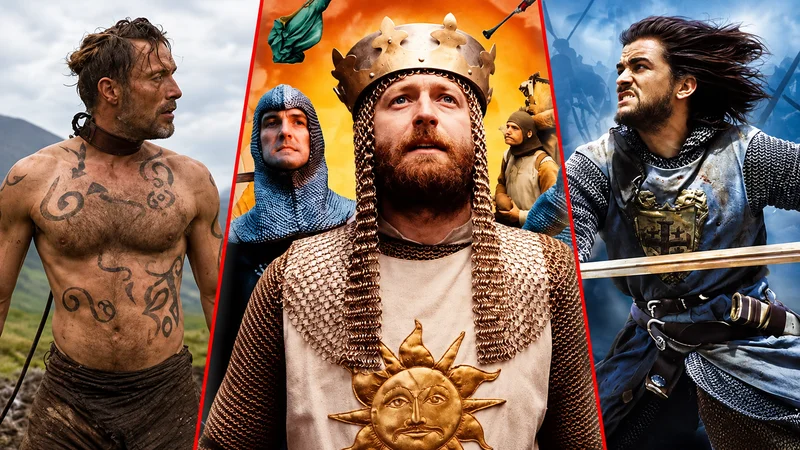
Some of the best medieval fantasy movies embrace a harsher world of dangerous magic, monstrous creatures, and warriors confronting threats beyond their understanding. These films range from adventurous sword-and-sorcery entertainment to grim fantasy horror.
31. Damsel (2024)
- Director: Juan Carlos Fresnadillo
- Fantasy elements: A dragon, a royal sacrifice, and an ancient curse
- Best for: Fantasy survival and a resourceful heroine
Princess Elodie agrees to marry a prince, expecting the arrangement to secure a better future for her family. Instead, she discovers that the royal household has concealed a terrifying tradition involving a dragon. Trapped in a dangerous environment, Elodie must find a way to survive without relying on the rescue normally promised in a fairy tale.
Millie Bobby Brown gives the heroine determination as she uses observation, improvisation, and physical endurance to overcome her predicament. The film combines medieval-style fantasy with the practical challenges familiar from best survival thriller movies, particularly isolation and limited escape options. Damsel is a strong choice for viewers seeking a princess story that replaces passive rescue with active survival.
32. Dragonslayer (1981)
- Director: Matthew Robbins
- Fantasy elements: A terrifying dragon, sorcery, and medieval sacrifice
- Best for: Dark creature fantasy and practical effects
A medieval kingdom attempts to appease a dangerous dragon by sacrificing young women selected through a lottery. When an aging wizard is asked to confront the creature, his apprentice Galen becomes involved in a mission that tests his limited magical abilities. The dragon’s continued presence exposes the fear and compromises shaping the kingdom’s traditions.
Dragonslayer distinguishes itself through an unusually formidable dragon and a world where confronting evil has serious consequences. The creature effects remain a major attraction, giving the threat an imposing physical presence. This is a particularly suitable recommendation for viewers who prefer darker, less sentimental fantasy adventures.
33. Conan the Barbarian (1982)
- Director: John Milius
- Fantasy elements: Ancient sorcery, warrior kingdoms, and dark cults
- Best for: Classic sword-and-sorcery action
After his family and people are destroyed by a powerful enemy, Conan grows into a formidable warrior determined to confront the forces responsible. His journey takes him through dangerous lands populated by criminals, warriors, sorcerers, and followers of a mysterious cult. Personal revenge gradually becomes connected to a larger supernatural threat.
Arnold Schwarzenegger’s physical performance and Basil Poledouris’s powerful musical score give the adventure a mythic quality. The fictional Hyborian Age is not historical medieval Europe, but its swords, kingdoms, and sorcery helped define the medieval-inspired fantasy style. Its violence and adult content make it better suited to mature audiences.
34. Dungeons & Dragons: Honor Among Thieves (2023)
- Directors: Jonathan Goldstein and John Francis Daley
- Fantasy elements: Wizards, dragons, enchanted relics, and magical kingdoms
- Best for: A humorous ensemble quest
Edgin, a charming thief, assembles a group of unlikely adventurers to recover a valuable magical artifact and repair the consequences of earlier decisions. Their mission requires cooperation among characters with very different abilities, including powerful magic and practical combat skills. Complications arise when their plans collide with dangerous enemies and unexpected betrayals.
The film captures the playful spirit of tabletop fantasy adventures without requiring viewers to understand the game beforehand. Chris Pine and Michelle Rodriguez lead an entertaining ensemble whose personalities are as important as their abilities. It is a welcoming modern option for audiences who want dragons and magical battles mixed with humor and friendship.
35. Krull (1983)
- Director: Peter Yates
- Fantasy elements: Enchanted weapons, alien creatures, and a threatened kingdom
- Best for: Cult science-fantasy adventure
Prince Colwyn searches for Princess Lyssa after a powerful enemy invades their world and disrupts their planned marriage. His quest requires finding a legendary weapon and gathering unusual allies capable of challenging the invader. The fictional kingdom combines medieval-style castles and warriors with elements of extraterrestrial science fiction.
Krull is distinctive because it freely mixes fantasy and science-fiction imagery rather than committing to one genre. Its elaborate sets, practical creatures, and adventurous musical score contribute to a memorable atmosphere. It is best approached as an imaginative 1980s adventure, particularly for viewers interested in unusual cult fantasy films.
36. Warcraft (2016)
- Director: Duncan Jones
- Fantasy elements: Orc clans, human kingdoms, and magical portals
- Best for: Large fantasy battles and competing civilizations
As their homeworld becomes increasingly uninhabitable, orc warriors travel through a magical portal into Azeroth, where human kingdoms face the possibility of invasion. Leaders on both sides struggle with loyalty, political responsibility, and the consequences of their decisions. The conflict becomes more complicated as individuals question the motives of the powers directing them.
Based on the Warcraft video game universe, the film places considerable emphasis on fantasy cultures and large-scale combat. Its extensive world-building may feel demanding for viewers unfamiliar with the franchise, but the visual design provides a strong sense of scale. It is particularly appealing for audiences who enjoy orc armies, magic, and complicated alliances between rival peoples.
37. Eragon (2006)
- Director: Stefen Fangmeier
- Fantasy elements: Dragon riders, magical abilities, and an oppressive king
- Best for: Young heroes and classic dragon adventures
A farm boy named Eragon discovers a mysterious stone that eventually reveals itself to be a dragon egg. His connection with the dragon Saphira draws him into a conflict involving an oppressive ruler and the forgotten legacy of the Dragon Riders. With guidance from an experienced mentor, Eragon must learn how to use abilities he barely understands.
Adapted from Christopher Paolini’s novel, Eragon provides familiar fantasy ingredients through a youthful coming-of-age story. The dragon’s connection with her rider supplies its strongest emotional appeal. The film simplifies and changes parts of the source material, so readers should not expect a faithful recreation of every book event.
38. Jack the Giant Slayer (2013)
- Director: Bryan Singer
- Fantasy elements: Giant kingdoms, enchanted beans, and royal adventure
- Best for: Fairy-tale action on an epic scale
Jack, a young farm worker, accidentally opens a passage between the human kingdom and a dangerous world occupied by giants. When Princess Isabelle becomes trapped beyond the passage, he joins a rescue expedition. The journey develops into a wider conflict as the giants threaten the safety of the people below.
The film expands a familiar fairy tale into a large-scale fantasy adventure with substantial digital creature effects. Nicholas Hoult gives Jack an approachable quality, while the royal characters add political stakes. Its strengths lie in visual spectacle and straightforward excitement rather than complex mythology or ambiguous storytelling.
39. The Head Hunter (2019)
- Director: Jordan Downey
- Fantasy elements: Medieval monsters, dark magic, and vengeance
- Best for: Minimalist dark fantasy horror
A solitary warrior living in a bleak medieval landscape dedicates himself to hunting dangerous creatures. His gruesome trophies reflect years of violent encounters, but the monster connected to his daughter’s death remains the one enemy he most wants to find. His isolated existence creates an atmosphere of exhaustion and unresolved grief.
The Head Hunter uses a limited cast and restrained production design to build an unsettling fantasy world. Rather than showing constant battles, it emphasizes the aftermath of violence and the physical cost of surviving repeated encounters. Its graphic imagery and ominous tone make it a distinctive choice for mature viewers interested in low-budget fantasy horror.
40. Army of Darkness (1992)
- Director: Sam Raimi
- Fantasy elements: Medieval armies, dark spells, and undead creatures
- Best for: Horror comedy and time-travel fantasy
Ash Williams finds himself transported from the modern world into a medieval kingdom threatened by supernatural forces. Armed with an unusual combination of contemporary equipment and reckless confidence, he must retrieve a mysterious book to return home. His mistakes complicate the situation, eventually drawing him into a conflict involving a terrifying undead army.
Bruce Campbell embraces the character’s exaggerated personality, turning sword-and-sorcery traditions into outrageous action comedy. Sam Raimi combines slapstick humor, horror imagery, and fantasy adventure with inventive visual effects. Army of Darkness is especially suitable for viewers who enjoy genre parody and do not mind grotesque creatures or exaggerated violence.
Medieval-Inspired Fantasy From Different Cultures
Looking beyond familiar European kingdoms expands the best medieval fantasy movies into Japanese folklore, Indian mythic adventure, Celtic legends, and Nordic storytelling. These films demonstrate how medieval-style fantasy can reflect different cultural traditions without pretending that all historical societies shared the same beliefs.
41. Princess Mononoke (1997)
- Director: Hayao Miyazaki
- Fantasy elements: Forest gods, ancient spirits, and a cursed warrior
- Best for: Japanese fantasy with environmental and moral complexity
Young warrior Ashitaka receives a dangerous curse and travels west in search of a possible cure. His journey brings him into a conflict between people developing an industrial settlement and supernatural beings defending the surrounding forest. San, a young woman raised among wolves, becomes central to a struggle in which neither side can be understood through simple assumptions.
Set in a fictionalized version of Japan’s medieval period, Princess Mononoke combines historical influences with Shinto-inspired spirits and extraordinary creatures. Hayao Miyazaki gives the conflict emotional complexity by allowing opposing characters recognizable motivations. It is a remarkable choice for viewers who want mythological fantasy with mature themes rather than a straightforward hero-versus-villain story.
42. Kubo and the Two Strings (2016)
- Director: Travis Knight
- Fantasy elements: Magical origami, mythical warriors, and supernatural relatives
- Best for: Stop-motion fantasy and emotional storytelling
Kubo, a young storyteller living in a Japanese-inspired world, discovers that dangerous supernatural forces are connected to his family’s past. Forced to leave his familiar home, he begins a quest to find legendary objects capable of protecting him. His companions provide guidance and humor while he learns more about the history shaping his identity.
Laika’s stop-motion animation gives the characters and landscapes an unusually tactile quality. The film draws on Japanese artistic and folkloric influences without depicting a precisely dated historical period. Its most affecting moments concern memory, family, and the stories people preserve about those they have lost.
43. The Secret of Kells (2009)
- Directors: Tomm Moore and Nora Twomey
- Fantasy elements: Celtic mythology, enchanted forests, and magical manuscripts
- Best for: Medieval Irish folklore and distinctive animation
Brendan lives in a fortified Irish monastery where preparations are underway to defend against Viking attacks. When a master illuminator arrives with an extraordinary manuscript, Brendan becomes fascinated by the possibility of helping complete it. His curiosity leads him into a mysterious forest where he encounters the fairy Aisling and dangers connected to ancient beliefs.
The Secret of Kells uses elaborate geometric animation inspired by medieval illuminated manuscripts. Its visual style makes the act of creating art central to the adventure. The film is especially rewarding for viewers interested in Celtic folklore and stories where imagination and cultural preservation become forms of resistance to fear.
44. The Tale of the Princess Kaguya (2013)
- Director: Isao Takahata
- Fantasy elements: A mysterious bamboo child and supernatural destiny
- Best for: Japanese folklore and emotionally rich animation
An elderly bamboo cutter discovers a tiny girl inside a glowing bamboo stalk and raises her with his wife. The child grows at an extraordinary rate, eventually attracting the attention of wealthy nobles and powerful figures. As others attempt to determine her future, she struggles with expectations that threaten the freedom she once enjoyed.
Based on a classical Japanese folktale, the film uses a setting influenced by courtly life in early medieval Japan. Isao Takahata’s watercolor-like animation gives its emotional moments extraordinary delicacy. Although less action-driven than many fantasy adventures, it is deeply moving in its examination of happiness, impermanence, and personal choice.
45. The Great Wall (2016)
- Director: Zhang Yimou
- Fantasy elements: Mythical monsters and warriors defending an ancient fortification
- Best for: Large-scale creature battles and military spectacle
European mercenaries searching for valuable materials travel into China and encounter an extraordinary military force protecting the Great Wall. They discover that the fortification serves as a defense against terrifying creatures capable of threatening civilization. As the danger intensifies, one mercenary must decide whether personal profit matters more than cooperation.
Zhang Yimou uses colorful military formations and large visual effects sequences to create a highly stylized fantasy adventure. The film’s Song dynasty-inspired setting is historical in appearance, but its monster conflict is entirely fictional. Choose it for imaginative action and spectacle rather than an accurate portrayal of the Great Wall’s history.
46. Baahubali: The Beginning (2015)
- Director: S. S. Rajamouli
- Fantasy elements: A legendary kingdom, extraordinary warriors, and royal destiny
- Best for: Indian epic spectacle and mythic adventure
Shivudu grows up near an enormous waterfall, unaware of the royal history connecting him to the powerful kingdom of Mahishmati. His determination to explore the world beyond his village eventually brings him into contact with warriors, political rivalries, and a long-standing struggle for the throne. His discoveries change his understanding of both his identity and his responsibilities.
S. S. Rajamouli creates a mythic world through enormous architecture, spectacular physical action, and emotionally heightened storytelling. Although the setting resembles an ancient Indian kingdom rather than historical medieval Europe, its heroic quests and royal conflicts make it relevant to medieval-style fantasy audiences. It is best watched as the beginning of a two-part epic.
47. Baahubali 2: The Conclusion (2017)
- Director: S. S. Rajamouli
- Fantasy elements: Royal succession, legendary warriors, and enormous battles
- Best for: Epic character conflicts and the continuation of a mythic saga
The second Baahubali film explores the history behind the political conflicts established in the first installment. Family loyalty, personal ambition, and competing claims to power shape the fate of Mahishmati. The story combines events from the past with consequences that continue influencing the kingdom’s future.
Rajamouli emphasizes grand emotional confrontations and elaborate action scenes that push the characters into larger-than-life territory. Prabhas and the ensemble cast bring considerable intensity to the royal drama. The film should be watched after The Beginning, since its major revelations depend on relationships and unanswered questions introduced earlier.
48. The Northman (2022)
- Director: Robert Eggers
- Fantasy elements: Norse mythology, visions, prophecy, and ritual magic
- Best for: Brutal Viking revenge and mythological atmosphere
Amleth, a Viking prince, witnesses a devastating betrayal that forces him into exile. Years later, he pursues vengeance against the person responsible for his family’s downfall. His journey unfolds through a harsh ninth-century Scandinavian world where supernatural visions and ritual beliefs shape how he understands his destiny.
Robert Eggers combines historical research with the symbolic intensity of Norse mythology, creating a story that exists between physical reality and spiritual experience. Alexander Skarsgård gives Amleth a fierce determination that becomes increasingly unsettling. The film contains graphic violence and disturbing imagery, making it an adult-oriented alternative to conventional heroic fantasy.
49. The Ash Lad: In the Hall of the Mountain King (2017)
- Director: Mikkel Brænne Sandemose
- Fantasy elements: Norwegian trolls, magical folklore, and a royal rescue
- Best for: Scandinavian fairy-tale adventure
Espen, a poor farmer’s son known as the Ash Lad, sets out with his brothers to rescue a princess threatened by the fearsome Mountain King. The quest offers a possible reward that could save his family’s farm, but the journey brings them into contact with dangerous creatures and unfamiliar magical challenges. Espen must rely on ingenuity rather than traditional noble status.
Inspired by Norwegian folk tales, the film provides a refreshing alternative to more familiar English-language fantasy kingdoms. Its rural landscapes and fantastical creatures give the story a strong regional identity. It is an enjoyable choice for viewers who appreciate adventurous fairy tales with humor and an inexperienced but resourceful central hero.
50. The Witcher: Sirens of the Deep (2025)
- Director: Kang Hei Chul
- Fantasy elements: Monster hunting, merpeople, and competing kingdoms
- Best for: Animated dark fantasy and supernatural investigation
Geralt of Rivia, a professional monster hunter, is hired to investigate mysterious attacks near a coastal village. His assignment becomes increasingly complicated as he encounters a long-standing conflict between humans and merpeople. The danger threatens to develop into a broader confrontation, forcing Geralt to consider motives that extend beyond identifying a single creature.
This animated feature expands the world of The Witcher through a story involving folklore, political tension, and morally complicated relationships between different peoples. The fantasy setting includes medieval-inspired settlements and institutions without claiming historical authenticity. It is best suited to mature viewers familiar with darker monster-hunting stories, although the central mystery provides an accessible introduction to Geralt’s profession.
Frequently Asked Questions
What are the best medieval fantasy movies for beginners?
The Lord of the Rings: The Fellowship of the Ring, Willow, Stardust, and Dungeons & Dragons: Honor Among Thieves are accessible starting points. Each introduces its magical world through characters whose goals are easy to understand. For family audiences, Shrek and The Sword in the Stone offer lighter alternatives.
Which medieval fantasy movies have the best dragons?
Dragonheart gives its dragon an important emotional role, while Dragonslayer emphasizes the terrifying power of a dangerous creature. The Hobbit: The Desolation of Smaug is particularly memorable for Smaug’s personality and scale. Damsel offers a different approach by making a dragon the center of a tense survival story.
Are medieval fantasy movies historically accurate?
Not necessarily. Many are set in completely fictional worlds inspired by medieval architecture, social systems, and weaponry. Films such as Excalibur and The Green Knight adapt legendary material, while Princess Mononoke and The Northman incorporate cultural traditions into fictional narratives. Historically inspired settings should not be confused with documented events.
Which medieval fantasy films are suitable for families?
The Sword in the Stone, Shrek, The Princess Bride, and Puss in Boots: The Last Wish are approachable choices for family viewing, although individual scenes may still frighten younger children. The Dark Crystal and The Black Cauldron contain darker imagery, while The Northman and The Head Hunter are intended for more mature audiences.
What is the difference between medieval fantasy and historical medieval movies?
Medieval fantasy uses magic, supernatural creatures, mythical events, or entirely invented worlds. Historical medieval films primarily dramatize human conflicts within recognizable historical settings. A film such as Kingdom of Heaven focuses on historical warfare, while Excalibur includes magical swords and legendary powers. Some movies combine both approaches, but fantasy requires an imaginative element beyond the historical setting alone.
Final Thoughts
The best medieval fantasy movies make their imaginary worlds meaningful through the choices of the people who inhabit them. The Lord of the Rings explores loyalty and sacrifice, The Green Knight questions the meaning of courage, and Princess Mononoke refuses to divide every conflict into simple heroes and villains. Whether you prefer enchanted castles, dangerous dragons, or stories drawn from ancient folklore, the most rewarding fantasy adventures offer more than spectacle. They invite you into a world that feels worth discovering.

Julian Parker is a dedicated entertainment writer at CandyJar, specializing in short dramas, captivating storylines, and trending mini-series. He shares insightful reviews, fresh perspectives, and thoughtful recommendations to help viewers discover stories worth watching.