
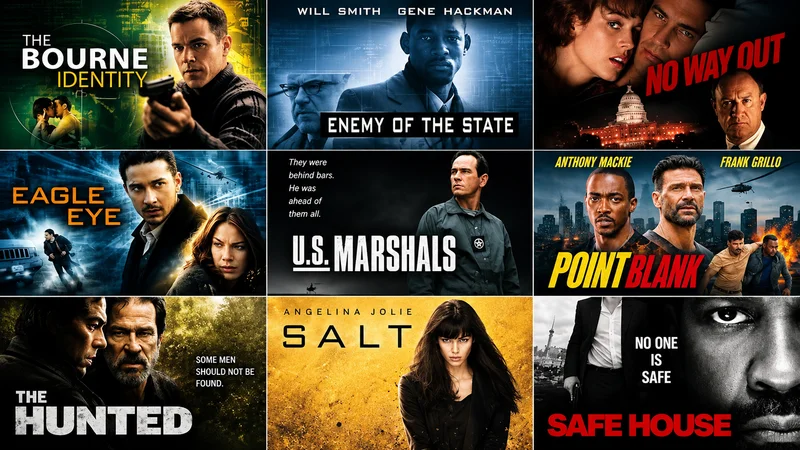
The best spy thriller movies balance dangerous secrets with the fear that someone close to the mission may be lying. This list brings together 48 espionage films, from Alfred Hitchcock classics and Cold War mole hunts to James Bond, Jason Bourne, Korean intelligence dramas, and newer releases such as Black Bag and The Amateur. Whether you want careful spycraft or adrenaline-heavy action, there is a different kind of uncertainty to enjoy.
At CandyJar, we favor movies that make undercover identities, classified information, divided loyalties, or covert operations important to the story. Not every spy film needs a gunfight, and not every movie involving politics qualifies as espionage. Each selection below has a director, a distinctive subgenre, and a short explanation of why it deserves consideration.
This guide to the best spy thriller movies covers films released from 1935 through 2025. The list is organized by viewing mood and type of espionage, rather than a claimed objective ranking. Historical stories are identified as dramatizations when appropriate, and the summaries avoid major ending spoilers. For films that premiered at festivals before their wider release, the year shown follows the original film release or festival premiere.
What Makes a Spy Thriller Worth Watching?
A compelling spy thriller should make information feel valuable and trust feel uncertain. Some of the best spy thriller movies are quiet conversations between professionals who know how to lie; others are races to recover stolen data or stop a clandestine operation. These are the defining elements to look for:
- Undercover identities and disguises: Agents must maintain convincing cover stories while strangers test their credibility.
- Double agents and uncertain loyalty: The danger may come from a colleague, handler, spouse, or government service that appears trustworthy.
- Surveillance and intelligence gathering: Intercepted conversations, codes, hidden documents, and patient observation drive the suspense.
- Secrecy and institutional conflict: Classified missions can put personal ethics at odds with the instructions of an intelligence agency.
- International stakes and historical settings: Borders, defections, wartime missions, and diplomatic consequences raise the risks of disclosure.
- Action versus psychological pressure: Some stories deliver elaborate pursuits, while others build dread through a single meeting or compromised identity.
Begin with The Bourne Identity or Mission: Impossible for urgent action, Tinker Tailor Soldier Spy for patient deduction, and The Lives of Others for emotional surveillance drama. Fans of newer theatrical releases can start with Black Bag or The Amateur. The recommendations below keep the focus on what actually makes each title distinctive.
Cold War Classics and the Origins of Spy Cinema
The best spy thriller movies of the classic era reveal the genre’s two competing traditions: glamorous adventure and suspicious, lonely intelligence work. These stories made mistaken identity, defection, and hidden handlers enduring sources of suspense.
1. The 39 Steps (1935)
- Director: Alfred Hitchcock
- Focus: Wrong-man espionage
- Best for: A brisk classic chase
Richard Hannay becomes caught up in an international spy plot after meeting a mysterious woman in London. Accused of murder and pursued by police, he travels through Britain searching for the people behind the conspiracy. The innocent-man-on-the-run structure turns railway journeys and chance meetings into potential traps.
Hitchcock mixes danger with humor and romantic friction, showing how an espionage story can work without elaborate gadgets. Its age is evident in some conventions, but the momentum and deceptive encounters remain engaging. Choose this if you want to see an early foundation for later spy adventure cinema.
2. Notorious (1946)
- Director: Alfred Hitchcock
- Focus: Undercover infiltration and romance
- Best for: An emotionally charged covert mission
Alicia Huberman is recruited to approach a group of Nazi associates in South America, placing her personal feelings in conflict with her assignment. The American agent overseeing her mission becomes emotionally entangled in the operation, even as the target draws her closer. A private relationship becomes the risky cover for gathering information.
Ingrid Bergman and Cary Grant make every pause feel consequential, while the famous wine-cellar sequence shows how a search for evidence can create enormous tension. Rather than glamourizing espionage, the film questions the cost of asking someone to sacrifice intimacy for a mission.
3. North by Northwest (1959)
- Director: Alfred Hitchcock
- Focus: Mistaken identity and foreign agents
- Best for: An entertaining escape thriller
Advertising executive Roger Thornhill is mistaken for a government operative and pursued across the United States by dangerous people who refuse to believe his protests. As he tries to clear his name, a seemingly helpful stranger brings another layer of uncertainty. The wrong-man premise keeps him moving faster than he can understand the plot.
Cary Grant balances panic and charm while Hitchcock delivers memorable sequences that turn open countryside and famous landmarks into danger zones. This is ideal for a viewer who wants classic espionage suspense with wit and romance rather than bleak bureaucratic intrigue.
4. From Russia with Love (1963)
- Director: Terence Young
- Focus: James Bond and counterintelligence
- Best for: Old-school agent-versus-agent suspense
James Bond travels to Istanbul to retrieve a valuable Soviet decoding device, unaware that a hostile organization has planned an intricate trap. The operation depends on deception and the appearance of a defector who might be trusted for the wrong reasons. Even Bond cannot know who is controlling the mission from a distance.
The train confrontation and the careful arrangement of rival operatives give this Bond film a stronger espionage feel than some of the franchise’s more extravagant adventures. It is a good entry point for viewers who prefer suspicious meetings and close combat to world-ending superweapons.
5. The Spy Who Came in from the Cold (1965)
- Director: Martin Ritt
- Focus: Defection and Cold War deception
- Best for: Morally complex espionage
British intelligence officer Alec Leamas is sent into a dangerous assignment built around the appearance of disillusionment and defection. As East and West German intelligence interests collide, the people carrying out the plan discover that they may know less than their superiors. The central problem is not simply who is lying but what the operation is designed to accomplish.
Richard Burton gives the film a weary, bitter center, refusing the easy satisfaction of a heroic spy fantasy. This John le Carre adaptation is essential for viewers who want the human cost of manipulation rather than glamorous gadgets. Its emotional chill is precisely its strength.
6. The Ipcress File (1965)
- Director: Sidney J. Furie
- Focus: Kidnapped scientists and counterespionage
- Best for: A grounded British agent story
Harry Palmer, an intelligence worker who is more skeptical than polished, investigates the disappearance of scientists in a world of rival offices and questionable instructions. The case becomes increasingly unsettling as surveillance, compromised loyalties, and coercive interrogation undermine his trust in the assignment.
Michael Caine makes Palmer a memorable alternative to Bond, complete with dry humor and little patience for authority. Unusual camera angles reinforce the feeling that an apparently ordinary workplace is full of concealed agendas. Choose it for character and atmosphere over spectacle.
7. Funeral in Berlin (1966)
- Director: Guy Hamilton
- Focus: Defection behind the Berlin Wall
- Best for: Bureaucratic intrigue and double-crosses
Harry Palmer is ordered to help arrange the defection of Soviet officer Colonel Stok from East Berlin. The proposed escape appears straightforward on paper, but brokers, intelligence handlers, and conflicting agendas complicate every step. Palmer must keep questioning why the target wants to leave and what his own superiors are withholding.
Berlin’s divided geography lends the mission an immediate Cold War texture. This sequel is a solid match for viewers who liked Palmer’s skeptical style in The Ipcress File, though its intricate maneuvering requires attention. The intrigue is rooted in bargaining rather than Bond-style spectacle.
8. The Quiller Memorandum (1966)
- Director: Michael Anderson
- Focus: Undercover pursuit of neo-Nazis
- Best for: An anxious Berlin-set investigation
An American intelligence operative travels to West Berlin to investigate a clandestine neo-Nazi network after earlier agents are killed. He attempts to find the group without exposing his own position, but his contacts prove difficult to evaluate. The city becomes a network of uncertain acquaintances and watchers.
George Segal, Alec Guinness, and Max von Sydow give the film an uneasy balance of vulnerability and manipulation. Harold Pinter’s screenplay places emphasis on pauses and incomplete exchanges. It is best for viewers who enjoy the paranoia of small conversations rather than elaborate chases.
9. Three Days of the Condor (1975)
- Director: Sydney Pollack
- Focus: CIA conspiracy and survival
- Best for: A tense agency-insider mystery
Joe Turner returns to his CIA research office to discover his colleagues have been murdered. His attempt to ask his own agency for protection only makes the situation more frightening. With no idea who has authorized the violence, he tries to trace the threat through work that had once seemed harmless.
Robert Redford keeps the hero resourceful but visibly frightened, and the film makes mistrust spread from strangers to institutions. Its 1970s anxiety remains compelling because the central question is practical: whom can you call when the organization meant to help might be compromised?
10. The Fourth Protocol (1987)
- Director: John Mackenzie
- Focus: Covert nuclear sabotage
- Best for: A procedural Cold War race
British intelligence officer John Preston uncovers fragments of a Soviet operation that could lead to a nuclear attack staged on British soil. Meanwhile, an undercover operative methodically assembles the necessary components. The film alternates investigation and preparation, making seemingly unremarkable actions feel ominous.
Michael Caine and Pierce Brosnan supply contrasting sides of a dangerous covert contest. Based on Frederick Forsyth’s novel, the thriller is especially appealing when you enjoy practical clues and institutional obstacles. The plot is fiction, not an account of a real nuclear operation.
Moles, Surveillance, and the Human Cost of Secrets
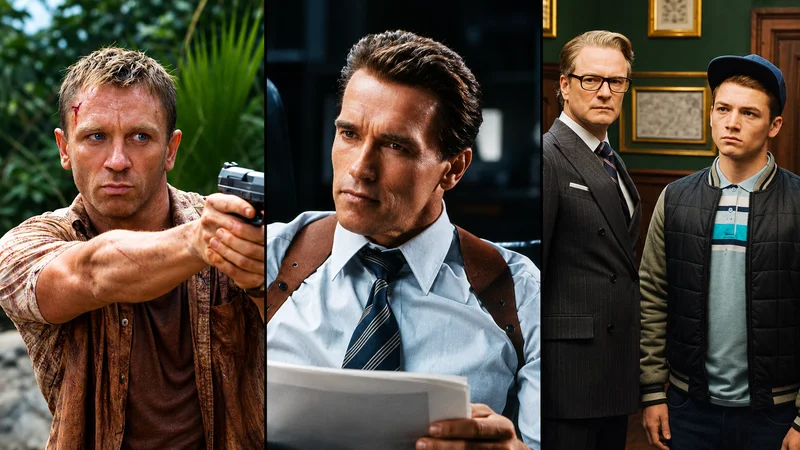
For viewers who prefer a careful investigation to a car chase, the best spy thriller movies often involve identifying a mole or following people whose daily lives have become part of an operation. These stories focus on trust, procedure, and professional responsibility.
11. Tinker Tailor Soldier Spy (2011)
- Director: Tomas Alfredson
- Focus: A mole inside British intelligence
- Best for: Patient, detail-rich deduction
George Smiley is quietly brought out of retirement to determine which senior intelligence figure may be passing secrets to the Soviet Union. Old loyalties complicate the search because nearly everyone at the top has a history with the others. Conversations, files, and recollections become more significant than open confrontation.
Gary Oldman gives Smiley a controlled presence that suits the film’s reticent style. This is a demanding puzzle, especially for viewers unfamiliar with le Carre, but its atmosphere of professional betrayal rewards close attention. It is among the best spy thriller movies for a patient audience.
12. The Lives of Others (2006)
- Director: Florian Henckel von Donnersmarck
- Focus: East German state surveillance
- Best for: Human conscience under scrutiny
A Stasi officer monitors a playwright and his partner in 1980s East Berlin, expecting to collect evidence of political disloyalty. Prolonged listening draws him into the lives of the people he watches, complicating the boundaries between professional duty and private judgment. Seemingly minor acts become significant when the state can inspect everything.
This German-language drama finds suspense in eavesdropping and the possibility of a small moral choice. Its characters are fictional within a documented surveillance system. Choose it for empathy and psychological pressure rather than gunfights or an elaborate escape route.
13. The Good Shepherd (2006)
- Director: Robert De Niro
- Focus: The formation of US intelligence culture
- Best for: A restrained institutional drama
Edward Wilson enters the intelligence world during the Second World War and becomes part of the developing American security establishment. The long timeline follows secret assignments, compromised relationships, and the ways professional secrecy separates him from family life. His identity is increasingly defined by information he cannot share.
Matt Damon delivers a deliberately guarded performance, and the film treats espionage as a lifelong system rather than an exciting temporary occupation. Its measured pace and dense historical backdrop are more appealing to viewers interested in institutional history than to those expecting constant action.
14. The Falcon and the Snowman (1985)
- Director: John Schlesinger
- Focus: Americans passing secrets to Soviet contacts
- Best for: A true-story-inspired betrayal drama
Two young American men become involved in selling sensitive information to Soviet intelligence during the 1970s. Their different motives and levels of seriousness expose the fragility of a partnership built on risk and resentment. The closer they move to actual espionage, the harder it becomes to imagine controlling the consequences.
Sean Penn and Timothy Hutton create a tense contrast between recklessness and conviction. Based on a documented espionage case, the film is still a dramatization of private actions and conversations. It is valuable for anyone interested in how espionage can begin far from the glamorous world of elite agents.
15. Breach (2007)
- Director: Billy Ray
- Focus: An FBI investigation of a mole
- Best for: Quiet surveillance and real stakes
Young FBI employee Eric O’Neill is assigned to work closely with Robert Hanssen, an experienced official secretly under investigation for passing American intelligence to Russia. Their office relationship becomes a delicate test of patience, observation, and self-control. A wrong move could alert the target before investigators obtain decisive evidence.
Chris Cooper makes Hanssen intimidating without relying on overt physical threats. The film is inspired by a real espionage investigation and shows how routine administrative interactions can carry enormous stakes. It is ideal for viewers who prefer a quietly escalating trap to a large-scale action spectacle.
16. Spy Game (2001)
- Director: Tony Scott
- Focus: CIA mentorship and covert rescue
- Best for: Emotionally grounded agency suspense
On the day he expects to retire, intelligence officer Nathan Muir learns that his former trainee Tom Bishop has been captured during an unauthorized operation in China. Officials are reluctant to intervene, so Muir begins using his knowledge of the agency and its people to change the outcome. Flashbacks show how the two agents came to trust and disappoint each other.
Robert Redford and Brad Pitt give the film a relationship strong enough to support its intricate operational plot. Tony Scott keeps the editing energetic, but the most engaging maneuvering happens in offices and through small acts of influence. It works for fans of clever rescues and hard-earned loyalty.
17. Bridge of Spies (2015)
- Director: Steven Spielberg
- Focus: Cold War prisoner exchange
- Best for: Diplomacy with human stakes
American lawyer James Donovan is called upon to represent a Soviet intelligence officer and later becomes involved in negotiations to exchange prisoners. His work takes him from a courtroom to divided Berlin, where competing demands and fragile agreements make each meeting important. The story follows an ordinary professional trying to hold to a principle under national pressure.
Tom Hanks gives Donovan a stubborn sense of fairness, and Mark Rylance is memorable as the accused spy. The film draws on history while dramatizing dialogue and events. Choose it for negotiations and moral resilience rather than a secret-agent pursuit.
18. The Courier (2020)
- Director: Dominic Cooke
- Focus: Cold War information passing
- Best for: An unlikely civilian spy
British businessman Greville Wynne is recruited to carry information from Soviet officer Oleg Penkovsky as tensions between Moscow and the West intensify. The arrangement depends on a credible business cover and a personal relationship that becomes increasingly risky. The nuclear stakes are enormous, but the covert exchanges remain remarkably ordinary in appearance.
Benedict Cumberbatch makes Wynne convincing as someone who learns the cost of espionage only gradually. The film premiered in 2020 before wider theatrical release in 2021 and is based on actual historical figures. It is a strong option when you want personal suspense inside a major geopolitical crisis.
19. A Most Wanted Man (2014)
- Director: Anton Corbijn
- Focus: Counterterrorism intelligence in Hamburg
- Best for: Careful surveillance and moral compromise
A man with a troubled past arrives in Hamburg, attracting the attention of German intelligence officer Gunther Bachmann and multiple security agencies. Bachmann sees a potential route to a larger network, while others favor a more immediate response. The operation depends on fragile trust between people with little reason to be candid.
Philip Seymour Hoffman gives the central investigator a weary intelligence and an awareness of human costs. The le Carre adaptation is intentionally subdued, with suspense built from surveillance, legal concerns, and professional disagreement. It is best for viewers who enjoy realism over explosions.
20. The Russia House (1990)
- Director: Fred Schepisi
- Focus: A British publisher as intelligence intermediary
- Best for: Romantic Cold War uncertainty
A British publisher becomes an unlikely intelligence contact after a manuscript containing sensitive Soviet material reaches the West. Intelligence services recruit him to evaluate its source and implications, placing him in a relationship where attraction and truth are difficult to separate. His personal decisions begin conflicting with the mission’s assumptions.
Sean Connery and Michelle Pfeiffer give the story a melancholy romantic dimension, while the post-Cold War mood favors uncertainty over triumph. This is a patient, dialogue-driven adaptation of a John le Carre novel and an intriguing alternative to kinetic spy thrillers.
Historical Missions, Wartime Covers, and Dangerous Defections
Some of the best spy thriller movies find tension in cover identities, covert escapes, and the personal cost of missions inspired by historical events. They offer dramatic interpretations rather than complete documentary accounts.
21. Argo (2012)
- Director: Ben Affleck
- Focus: CIA exfiltration under an invented film cover
- Best for: An accessible rescue operation
Six American diplomats take refuge in Tehran during the 1979 hostage crisis, and a CIA specialist devises a cover story involving a fake science-fiction production to help them leave Iran. The mission depends on coordinated documents, plausible behavior, and the ability to make a fabricated professional identity seem routine under scrutiny.
Affleck balances suspense with surprisingly effective moments of Hollywood satire. The film is based on a real escape but makes dramatic changes, particularly in how national contributions are represented. It is an engaging option for viewers who enjoy elaborate cover identities and a concrete deadline.
22. Black Book (2006)
- Director: Paul Verhoeven
- Focus: Dutch resistance infiltration
- Best for: High-risk World War II undercover drama
A Jewish woman in Nazi-occupied Netherlands becomes involved in resistance work and is assigned to get close to a German officer. Her apparent allegiance becomes the cover for passing information, but competing interests within several groups make the mission unstable. Personal attachment increases the risk of betrayal.
Carice van Houten anchors a tense and sometimes brutal film that refuses to divide every character neatly into heroes and villains. Its mixture of deception, survival, and moral uncertainty makes it appealing to viewers who like historical espionage with emotional complexity. Expect adult material and wartime violence.
23. Allied (2016)
- Director: Robert Zemeckis
- Focus: World War II undercover marriage
- Best for: Romance tested by suspicion
An intelligence officer and a French Resistance operative meet during a covert mission in Casablanca and later build a life together. Their relationship becomes endangered when doubts arise about one partner’s loyalty. A mission once defined by an external enemy becomes a more intimate effort to determine whom to believe.
Brad Pitt and Marion Cotillard lend the film an elegant old-Hollywood mood, while the suspense depends on the painful possibility that love may not reveal the truth. It is a good option for viewers who enjoy romantic drama in a wartime espionage setting.
24. Operation Mincemeat (2021)
- Director: John Madden
- Focus: Allied military deception during World War II
- Best for: Ingenious intelligence planning
British intelligence officers Ewen Montagu and Charles Cholmondeley create a plan to mislead German forces about an upcoming Allied invasion. Their scheme requires fabricated documents and a carefully constructed personal identity attached to a dead man. The tension lies in whether numerous small elements of the deception will survive enemy scrutiny.
Colin Firth and Matthew Macfadyen give the planning an engaging mixture of professional pride and anxiety. The mission was real, while the film dramatizes relationships and decision-making. It is a rewarding pick when you prefer intelligence tradecraft to battlefield combat.
25. The Debt (2010)
- Director: John Madden
- Focus: Mossad operation and long-buried secrets
- Best for: Two timelines and a moral mystery
Three Israeli operatives pursue a Nazi war criminal hiding in East Berlin during the 1960s. Decades later, the public narrative surrounding their mission begins to unravel, forcing the former agents to confront what really happened. The operation’s consequences persist long after the immediate danger has passed.
Jessica Chastain and Helen Mirren portray the same central operative at different points in life, adding emotional weight to a mystery about reputation and memory. The film screened in 2010 and reached US theaters in 2011. It is fictional, though its historical setting lends the mission gravity.
26. The Angel (2018)
- Director: Ariel Vromen
- Focus: An Egyptian insider passing intelligence
- Best for: A controversial real-life-inspired double-agent story
Ashraf Marwan, connected to Egypt’s political leadership, becomes a source of information for Israeli intelligence during a volatile period before the 1973 war. The drama follows how a person with extraordinary access manages competing relationships and the risk of discovery. The very meaning of his loyalty becomes central to the story.
The film offers a different regional perspective from familiar CIA and MI6 thrillers. Historical interpretations of Marwan’s role remain disputed, so the screenplay should be seen as a dramatization rather than a final judgment about motive. It is best for viewers interested in the ambiguity of intelligence sources.
27. Munich (2005)
- Director: Steven Spielberg
- Focus: Covert operations after a terrorist attack
- Best for: Espionage and the cost of retaliation
Following the killing of Israeli athletes at the 1972 Munich Olympics, a covert team is assigned to target people believed to be connected to the attack. The operatives move between European cities using secrecy and surveillance, but repeated missions make certainty about their objectives harder to maintain.
Spielberg gives the set pieces urgency without making the personal costs disappear. The film dramatizes contested historical material, so particular events and motives should not be treated as settled fact. If you also enjoy stories where intelligence and public power collide, our guide to best political thriller movies explores that broader theme.
28. The Operative (2019)
- Director: Yuval Adler
- Focus: An undercover Mossad agent in Tehran
- Best for: Identity and handler tension
Rachel is recruited for undercover work in Iran, where building a credible private life becomes part of the assignment. Her handler must interpret her decisions from a distance as the operation grows riskier and her personal attachments complicate loyalties. The story explores the uncomfortable gap between following orders and inhabiting a false identity.
Diane Kruger brings reserve and uncertainty to a spy drama that is more interested in psychological cost than action spectacle. The film premiered at the 2019 Berlin International Film Festival. It suits viewers who appreciate ambiguous decisions and questions about an agent’s autonomy.
29. The Spy Gone North (2018)
- Director: Yoon Jong-bin
- Focus: A South Korean agent posing as a businessman
- Best for: Patient cross-border deception
A South Korean operative adopts a business identity to approach influential North Korean figures during the 1990s. Negotiations, commercial relationships, and political uncertainty become pieces of the intelligence mission. His cover succeeds only when the people around him accept a convincing ordinary explanation for his repeated contacts.
The film draws on a real espionage case but uses dramatic interpretation. Its strongest scenes make conversations and social rituals feel as dangerous as physical infiltration. Choose it if you want measured Korean spycraft with serious political stakes rather than constant action.
30. Lust, Caution (2007)
- Director: Ang Lee
- Focus: Wartime infiltration in occupied Shanghai
- Best for: Psychologically complex undercover romance
A young woman joins a resistance plot that requires her to build a relationship with an influential official aligned with an occupying power. Maintaining the cover demands emotional performances that eventually become difficult to separate from actual feeling. The mission tests whether loyalty to a cause can survive prolonged personal intimacy.
Ang Lee treats espionage as a struggle over identity and desire rather than a sequence of missions. Its explicit sexual content and disturbing power dynamics require a clear content warning. For viewers comfortable with the material, the tension is unusually intimate and emotionally challenging.
High-Stakes Agents, Action, and Modern Espionage
The best spy thriller movies can also be thrilling action adventures, where intelligence work becomes the spark for pursuit, international danger, and betrayals. These films tend to favor momentum, but the stronger choices still give their heroes something personal to lose.
31. Casino Royale (2006)
- Director: Martin Campbell
- Focus: James Bond in an early high-stakes mission
- Best for: Poker, pursuit, and compromised trust
Newly promoted 00 agent James Bond pursues a financier linked to terrorism and is drawn into an unusually consequential poker game. An MI6 representative overseeing the money becomes more than a colleague, complicating Bond’s decisions. The film reframes the character as physically capable but emotionally inexperienced.
Daniel Craig brings volatility and vulnerability to a franchise often associated with polished invincibility. The high-stakes card game is as tense as the chases because each decision exposes something about the players. Begin here if you want modern Bond with a sharper emotional edge.
32. Skyfall (2012)
- Director: Sam Mendes
- Focus: MI6 compromised by an insider threat
- Best for: A character-driven Bond spectacle
An attack on MI6 exposes sensitive information and forces Bond to pursue an adversary with a personal connection to his superior M. The investigation brings questions about aging intelligence institutions and whether traditional field agents still have a role in a world of digital leaks.
Sam Mendes combines large-scale action with a surprisingly intimate examination of loyalty and failure. Javier Bardem makes the antagonist personal rather than merely powerful, while Judi Dench gives the institutional conflict emotional stakes. This is a good choice for stylish suspense with an emphasis on Bond’s past.
33. The Bourne Identity (2002)
- Director: Doug Liman
- Focus: Amnesiac operative pursued across Europe
- Best for: Intense survival and self-discovery
A man rescued from the sea has no memory of his name but possesses skills that suggest a dangerous former life. As he searches for his identity, unfamiliar pursuers and secretive handlers make every encounter potentially deadly. His abilities are an advantage, yet they also provide disturbing clues about what he might have done.
Matt Damon grounds the action in confusion and vulnerability, giving the story a human mystery alongside its chases. The European locations and practical-feeling fights distinguish it from extravagant gadget stories. It is the ideal introduction to the Bourne series.
34. The Bourne Ultimatum (2007)
- Director: Paul Greengrass
- Focus: A fugitive confronting a covert agency program
- Best for: Relentless modern spy action
Jason Bourne continues searching for the truth behind his former intelligence work while officials attempt to contain the evidence he is uncovering. The pursuit stretches across borders and crowded public places, where surveillance and rapidly changing plans make trust nearly impossible. His goal is no longer simply staying alive.
Paul Greengrass builds urgency through tightly coordinated movement and quick decisions. The kinetic editing can be demanding, but the story keeps the conflict connected to Bourne’s damaged identity. Watch The Bourne Identity and The Bourne Supremacy first to appreciate the character arc fully.
35. Mission: Impossible (1996)
- Director: Brian De Palma
- Focus: An agent accused of betraying his team
- Best for: A stylish mole mystery
After a mission in Prague collapses, IMF agent Ethan Hunt is treated as a suspect rather than a survivor. He must identify a traitor inside his organization without relying on its official support. Disguises, false signals, and a risky operation to obtain intelligence turn the spy story into a sequence of clever puzzles.
De Palma emphasizes suspense and manipulation alongside the first film’s famous stunt moments. Compared with the later sequels, this installment has a more pronounced whodunit structure. It remains rewarding for viewers who enjoy suspect lists and operational planning as much as action.
36. Mission: Impossible – Fallout (2018)
- Director: Christopher McQuarrie
- Focus: A failed operation with global consequences
- Best for: Spectacular physical stunts
Ethan Hunt and his IMF allies try to prevent dangerous weapons from reaching extremists after a mission goes wrong. Their pursuit involves uneasy alliances, competing handlers, and rapidly escalating demands. Hunt’s reluctance to sacrifice individuals for a larger objective shapes both his strengths and his vulnerabilities.
The set pieces are exceptionally ambitious, with tension created by the sense of real physical risk. Henry Cavill adds uncertainty to the team dynamic. This is an excellent choice for action-first audiences, though familiarity with earlier Mission: Impossible films gives some relationships greater weight.
37. Mission: Impossible – The Final Reckoning (2025)
- Director: Christopher McQuarrie
- Focus: A global threat involving an advanced AI
- Best for: High-stakes franchise continuation
Ethan Hunt and the IMF continue confronting the Entity, an artificial intelligence that has infiltrated major intelligence systems. Following the events of Dead Reckoning, they must manage dangerous alliances and a mission that draws on Hunt’s past. The story treats technological compromise as an international security threat.
Its sprawling action is designed for viewers invested in the franchise’s long history. The film arrived in theaters in 2025; watching Dead Reckoning first is strongly recommended. This is a spectacle-driven spy thriller rather than a realistic picture of day-to-day intelligence work.
38. Atomic Blonde (2017)
- Director: David Leitch
- Focus: A British agent in late Cold War Berlin
- Best for: Stylized combat and double-crosses
On the eve of the Berlin Wall’s collapse, MI6 operative Lorraine Broughton arrives in the city to recover sensitive information and investigate an agent’s death. Every contact may be playing for another side, and shifting stories complicate the search. The fractured structure makes her assignment feel as dangerous as the streets.
Charlize Theron delivers hard-hitting physical action that contrasts with the movie’s neon style and period soundtrack. The espionage puzzle is deliberately twisty, although the visceral combat is the biggest draw. Choose it when you want spy genre intrigue with a distinctly action-driven presentation.
39. Salt (2010)
- Director: Phillip Noyce
- Focus: A CIA officer accused of being a sleeper agent
- Best for: Fast-moving identity uncertainty
CIA officer Evelyn Salt is accused by a defector of being a Russian sleeper agent, and her abrupt response raises new questions about her loyalty. Colleagues pursue her as she moves through an increasingly elaborate series of escapes. The central mystery depends on how much of her apparent identity can be believed.
Angelina Jolie makes Salt resourceful without stopping to explain every intention, giving the audience a reason to keep revising its assumptions. The film favors pace and action over realistic procedure, which suits viewers looking for a streamlined weekend thriller.
40. Hanna (2011)
- Director: Joe Wright
- Focus: A teenager trained for covert survival
- Best for: An unusual coming-of-age chase
Hanna has been raised in isolation by a former operative and trained to survive a confrontation with the intelligence official pursuing them. When she enters the wider world, everyday social experiences are as unfamiliar as the agents tracking her. Her search for answers becomes intertwined with questions about who shaped her childhood.
Saoirse Ronan gives the title character a mix of discipline and innocence. The film stands apart from many spy thrillers through its fairy-tale imagery and coming-of-age elements. Choose it for inventive direction and a heroine whose personal discoveries matter as much as the chase.
41. The Man from U.N.C.L.E. (2015)
- Director: Guy Ritchie
- Focus: Rival agents cooperating during the Cold War
- Best for: Playful stylish teamwork
An American agent and a Soviet operative are ordered to work together against a criminal organization developing a dangerous nuclear technology. Their rivalry complicates a mission that depends on trusting each other, while a civilian connected to the case becomes essential to the cover. Disguises and shifting plans create a polished adventure.
Guy Ritchie favors quick banter, retro design, and a lighter touch than most films on this list. It is less interested in strict realism than in the entertainment of incompatible professionals learning to collaborate. Choose it for charming spy capers and energetic action.
42. Black Bag (2025)
- Director: Steven Soderbergh
- Focus: A suspected mole within an intelligence marriage
- Best for: Dry wit and sophisticated interrogations
British intelligence officer George Woodhouse is asked to identify a traitor within a small circle of colleagues, only to discover that his wife Kathryn is among the suspects. Dinner conversations and private tests take on the weight of formal interrogations. The assignment places professional suspicion directly inside an intimate relationship.
Michael Fassbender and Cate Blanchett make restraint itself exciting, while Soderbergh keeps the plot compact and sharp. It is a modern choice for viewers who want intelligence games and adult dialogue rather than endless explosions. The official 2025 release supplies a fresh example of the mole-hunt tradition.
43. The Amateur (2025)
- Director: James Hawes
- Focus: A CIA cryptographer seeking justice
- Best for: Brainpower instead of elite combat skills
Charlie Heller is a brilliant but socially reserved CIA decoder whose life changes when his wife is killed in a terrorist attack. Frustrated by the response of his superiors, he takes an unauthorized course of action to pursue those responsible. His analytic expertise becomes an unlikely advantage against more experienced operatives.
Rami Malek makes the protagonist a different kind of spy-film hero, one who must improvise because he lacks the usual field background. It is a revenge-oriented action thriller, but the contrast between intelligence work and field risk gives the premise its distinctive identity.
International Espionage Beyond Hollywood
The best spy thriller movies are not limited to MI6 or the CIA. These Korean and Indian films explore divided loyalties, colonial history, intelligence rivalries, and the difficulties of maintaining an undercover life across borders.
44. The Age of Shadows (2016)
- Director: Kim Jee-woon
- Focus: Korean resistance and Japanese colonial police
- Best for: An intricate undercover period drama
During Japanese rule in Korea, an officer working for the colonial police develops a complicated relationship with members of a resistance network. The mission to move explosives and identify informants exposes loyalties that are neither stable nor easily declared. Every apparent ally may be serving another purpose.
Kim Jee-woon combines impressive period staging with tension built around trust and betrayal. Train journeys and private meetings give the plot its suspenseful rhythm. The historical setting is real, but the dramatic characters and individual operations should not be treated as a complete factual account.
45. Hunt (2022)
- Director: Lee Jung-jae
- Focus: Rival South Korean intelligence units searching for a mole
- Best for: A dense action conspiracy
Two senior intelligence chiefs investigate possible infiltration within the agency, and suspicion begins moving between their own departments. A leak threatens national security while each official becomes increasingly convinced the other knows more than he admits. The hunt for an insider expands toward a dangerous political conspiracy.
Lee Jung-jae directs and stars in a film that combines hard-hitting action with complicated loyalties. Its rapidly shifting information may require close attention, but the adversarial teamwork gives it momentum. Choose it when you want Korean espionage with urgency and twists.
46. Raazi (2018)
- Director: Meghna Gulzar
- Focus: An Indian woman spying inside Pakistan
- Best for: Personal sacrifice in a historical setting
During the tense period before the 1971 India-Pakistan war, a young Indian woman agrees to marry into a Pakistani military family to gather intelligence. The mission requires ordinary family life to become a continuous act of concealment. Every new attachment increases the emotional cost of passing information.
Alia Bhatt makes the protagonist’s fear and conviction central, avoiding the fantasy that undercover work is easy once the cover is established. The film is adapted from a novel inspired by real events, so its precise scenes are dramatized. It is an effective option for viewers seeking emotionally grounded South Asian espionage.
47. Khufiya (2023)
- Director: Vishal Bhardwaj
- Focus: An intelligence leak and a suspected insider
- Best for: A patient Indian spy mystery
An Indian intelligence operative investigates the disappearance of sensitive information after an undercover source is compromised. Suspicion turns toward people whose private routines suggest little about their possible professional lives. The operation follows several personal relationships, making loyalty both a practical and an emotional question.
Tabu brings controlled intensity to a story that gives considerable space to domestic secrecy. Its measured pace and layered structure suit viewers who prefer character-driven espionage to explosive set pieces. The film is adapted from Amar Bhushan’s novel Escape to Nowhere, rather than presented as an exact reconstruction of events.
48. The Berlin File (2013)
- Director: Ryoo Seung-wan
- Focus: Korean intelligence rivalry in Germany
- Best for: International action and tangled allegiances
A failed arms deal in Berlin draws South Korean intelligence attention to a North Korean operative and the people around him. Suspicion grows inside the covert network as agents from several sides try to identify leaks and maintain their cover. The European setting highlights how far the Korean conflict extends beyond the peninsula.
Ha Jung-woo and Han Suk-kyu bring urgency to a plot that moves between surveillance and fast physical action. This is a strong final selection for viewers who want an international spy thriller with practical danger and complicated family loyalties, rather than a simple good-agent-versus-bad-agent contest.
Frequently Asked Questions
What are the best spy thriller movies for beginners?
The Bourne Identity and Mission: Impossible are accessible starting points for action fans, while North by Northwest offers classic suspense with wit. For a quieter experience, try Black Bag or Tinker Tailor Soldier Spy, keeping in mind that the latter asks for close attention to names and professional relationships.
Which spy movies focus on realistic intelligence work?
The Spy Who Came in from the Cold, Tinker Tailor Soldier Spy, Breach, A Most Wanted Man, and The Lives of Others emphasize surveillance, human sources, compromised loyalties, and institutional limits. They remain dramatized stories, not training guides to intelligence practice.
What are the best Cold War spy films?
From Russia with Love, The Ipcress File, Funeral in Berlin, The Fourth Protocol, and Bridge of Spies provide contrasting Cold War perspectives. The Courier is also appealing for its real-life-inspired civilian intelligence work, and The Spy Gone North explores a later period of Korean cross-border tension.
Which spy thrillers are based on true events?
Breach, The Courier, Bridge of Spies, Operation Mincemeat, Argo, and The Falcon and the Snowman draw from documented cases or operations. Each reshapes some dialogue, timing, and incidents for storytelling. The Angel and Munich interpret historical material whose details or motives may be contested.
Where can I watch spy thriller movies with subtitles?
Licensed streaming and rental availability varies by country and changes over time. Search the exact title and release year on the service available in your region, and confirm subtitle languages before renting. For films with similar titles or multiple adaptations, verify the director as well.
Final Thoughts
The best spy thriller movies are most memorable when discovering a secret changes what a character believes about loyalty. Hitchcock makes an innocent traveler fear every introduction, le Carre turns paperwork into betrayal, and modern action franchises make personal choices matter amid global threats. Choose the kind of intelligence story that suits your mood, and leave the central reversals unspoiled. A convincing cover story is always more interesting when you discover its cracks for yourself.

Julian Parker is a dedicated entertainment writer at CandyJar, specializing in short dramas, captivating storylines, and trending mini-series. He shares insightful reviews, fresh perspectives, and thoughtful recommendations to help viewers discover stories worth watching.